1200W Pet Heater for Dog House review
Looking for a reliable, pet-safe heater that keeps your dog house, cat shelter, or chicken coop warm without waking the whole yard?

Quick summary
You want a heater that balances power, safety, and convenience, and this 1200W Pet Heater aims to deliver. It offers three power modes, remote and app control, a 2-meter temperature probe, and several pet-proof design features to give your animals steady warmth and you peace of mind.
What the product is
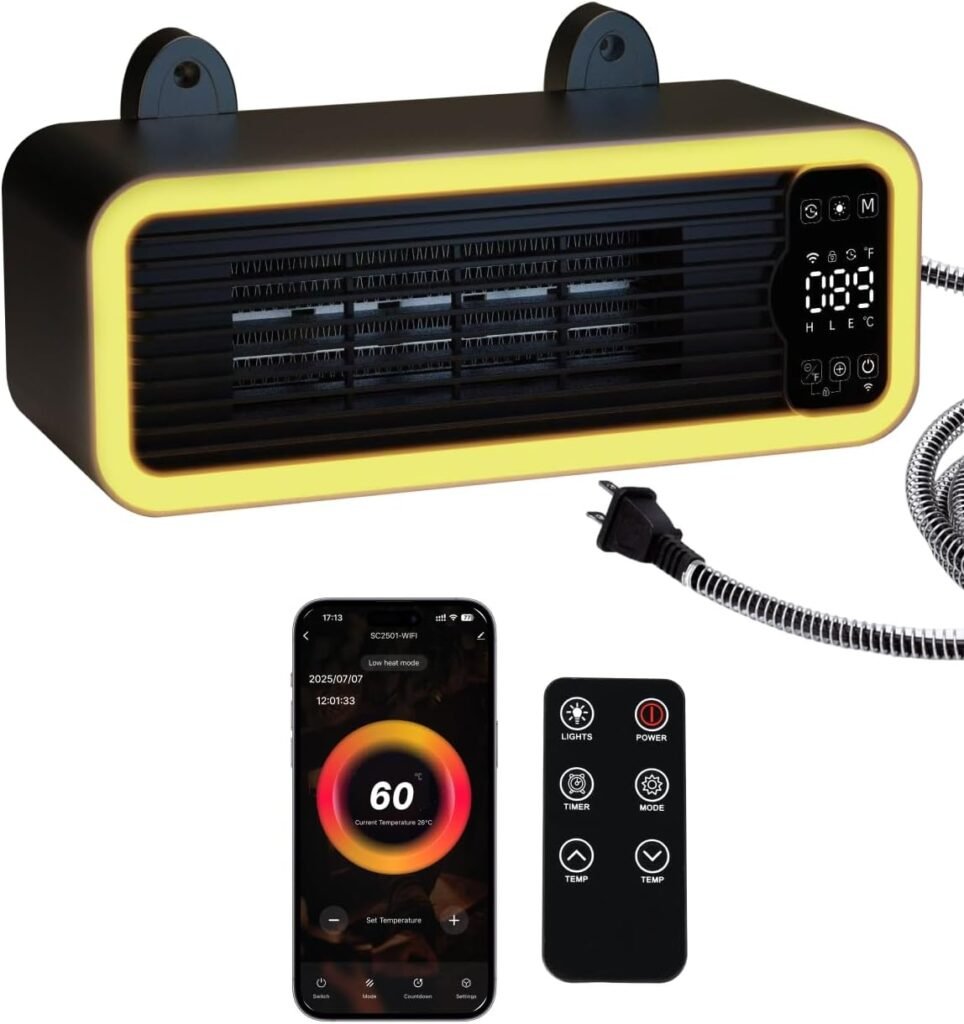
This unit is the “1200W Pet Heater for Dog House, Smart APP & Remote Control Heater with 3-Temp Modes, Temperature Probe & Digital Display, Safe Anti-Chew Cord, Under 45dB for Dog Houses, Cat Shelters & Chicken Coops”. You’ll get a compact electric heater designed specifically for small enclosed animal spaces, offering both manual and smart controls plus safety features focused on pets and small livestock.
Key specifications
Below is a clear breakdown of the most important specs so you can quickly understand what this heater offers and whether it matches your needs.
| Feature | Details |
|---|---|
| Power Levels | High 1200W / Low 850W / ECO (variable) |
| Coverage | Up to ~600 ft³ (approximately 17 m³) |
| Temperature Range | 5–45°C (41–113°F) |
| Temperature Probe | External 2 m (6.6 ft) sensor cable |
| Controls | Mobile APP, infrared remote, manual buttons |
| Timer | 24-hour programmable timer |
| Noise | <45 db during operation< />d> |
| Safety | Flame-retardant casing; auto shut-off; cut-off at 75°C |
| Fan | Hair-resistant smart fan |
| Cord | Reinforced anti-chew cord |
| Filter | Detachable hair/lint filter |
| Installation | Wall mountable or freestanding |
| Certification | UL-certified |
| Suitable spaces | Dog houses, cat shelters, rabbit cages, chicken coops, garages up to 600 ft³ |
You’ll notice the specs focus on safety, flexibility, and smart control. These characteristics can make this heater a practical choice for many types of pet housing.
Heating performance
You want warmth that builds quickly and keeps your pet comfortable without constant fiddling. This heater’s higher wattage and temperature probe work together to deliver fast heating and steady maintenance of the chosen temperature.
This model uses a ceramic heating element and a controlled fan to distribute heat evenly. The unit’s ability to auto-adjust using the external probe helps reduce temperature swings that might otherwise stress your animal.
Power and modes
You can choose between High (1200W), Low (850W), and ECO modes depending on how fast you need the space to heat and how much energy you want to use. In practice, High provides substantially faster heat-up times, while ECO is meant to maintain a comfortable zone with lower energy use.
When you need rapid heat—like on a suddenly cold night—use the high setting. If the space is fairly insulated and only needs a gentle boost, ECO will likely keep temperatures steady while saving you money.
Temperature accuracy and probe
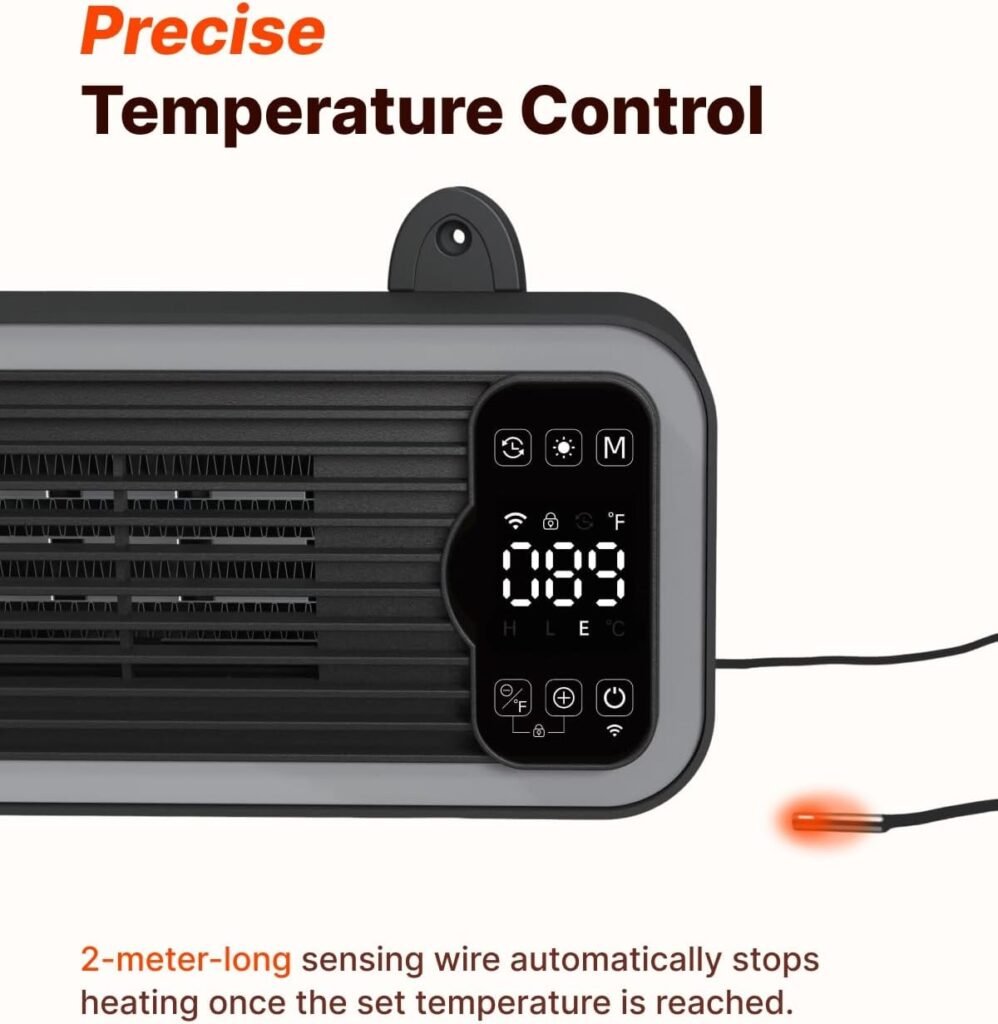
You’ll use the 2-meter external probe to ensure the heater measures ambient temperature where your pet actually is, rather than where the heater sits. That leads to more accurate control and fewer false cycles.
Because the probe sits where you place it, you can avoid overheating the animal’s immediate sleeping area. The unit will stop heating automatically when it reaches the set temperature, then resume if the ambient temperature drops.
Coverage and warm-up time
For enclosed spaces up to about 600 ft³, you’ll typically find the heat distribution adequate. Smaller dog houses or cat shelters will warm quickly; larger, draftier spaces will take longer and may require insulation or supplemental heat.
Warm-up time depends on insulation, outside temperature, and the mode you select. Expect fast results on High in a properly insulated space, while Low or ECO modes take longer but use less energy.
Controls and connectivity
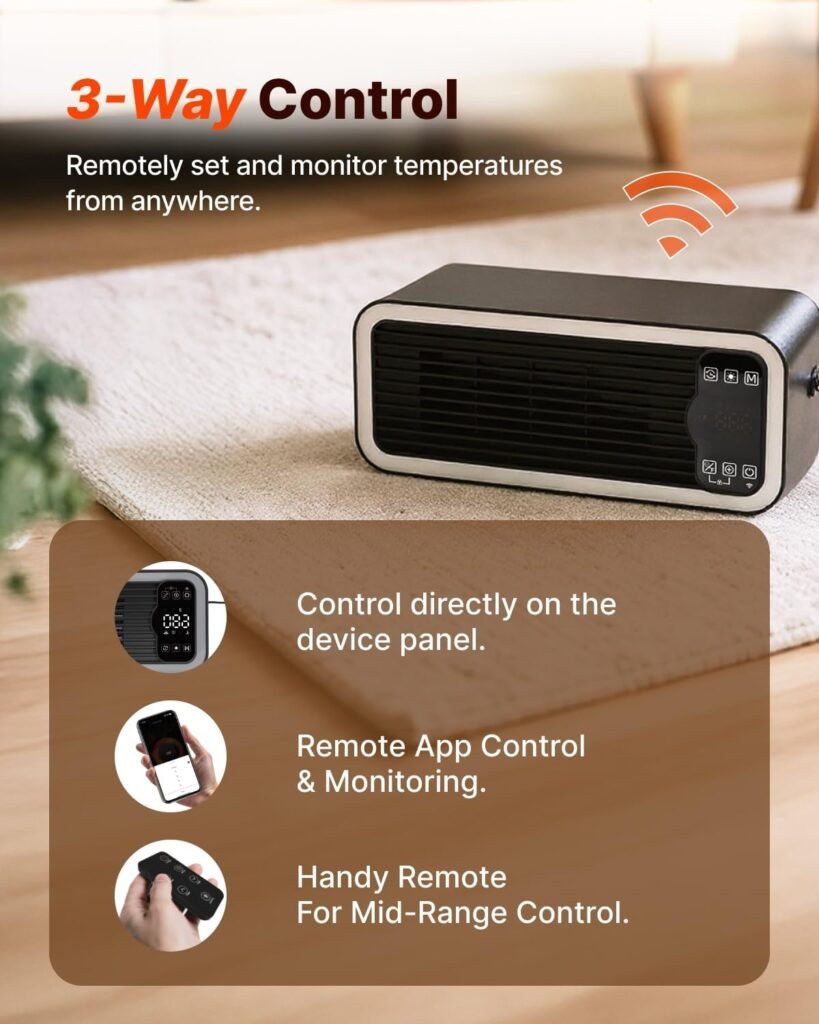
You’ll appreciate multiple ways to control the heater: app, infrared remote, and manual buttons. That flexibility is convenient because you can change settings from inside the house, from your car, or on the unit itself.
All three control methods are straightforward, but the mobile app adds scheduling and remote access so you can set routines or make adjustments when you’re away.
APP control
Using the app, you can set temperature targets, toggle modes, start or stop the timer, and monitor the current temperature read by the external probe. The app also makes it easy to create a daily schedule so the heater runs automatically at the times you choose.
If you travel frequently or want to check on things without returning to the property, the app functionality is one of the most valuable features. Make sure your Wi-Fi reaches the location if app control is important to you.
Infrared remote and manual buttons
The infrared remote gives you quick, nearby control without needing to touch the heater. It’s handy when you’re outside near the house or coop but don’t want to bring your phone.
Manual buttons on the unit provide basic functions for when connectivity isn’t available or you prefer physical controls. The combination of remote and physical buttons ensures you’re never locked out of control.
Safety features
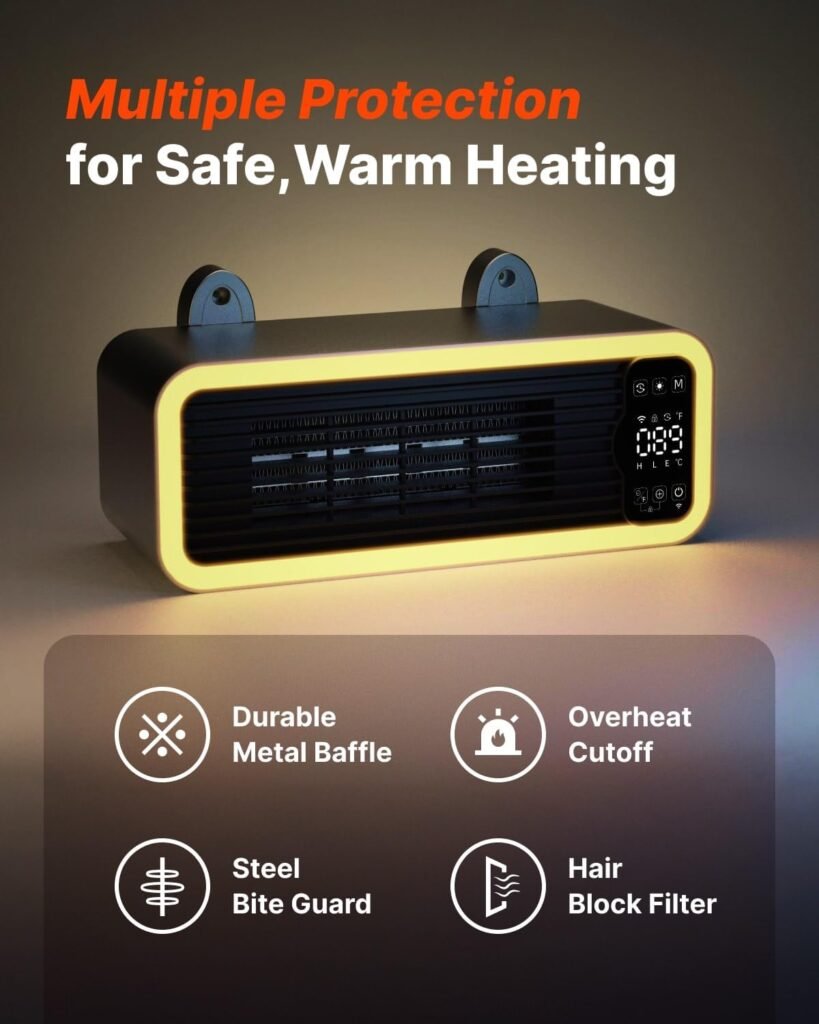
Your pet’s safety is the core consideration for any heating solution, and this heater includes multiple layers of protection. You’ll find prevention against overheating, flame-retardant materials, and a protective design against chewing and hair ingress.
These protections don’t eliminate risk entirely, but they significantly reduce common hazards associated with electric heaters near animals.
Overheat protection and flame-retardant design
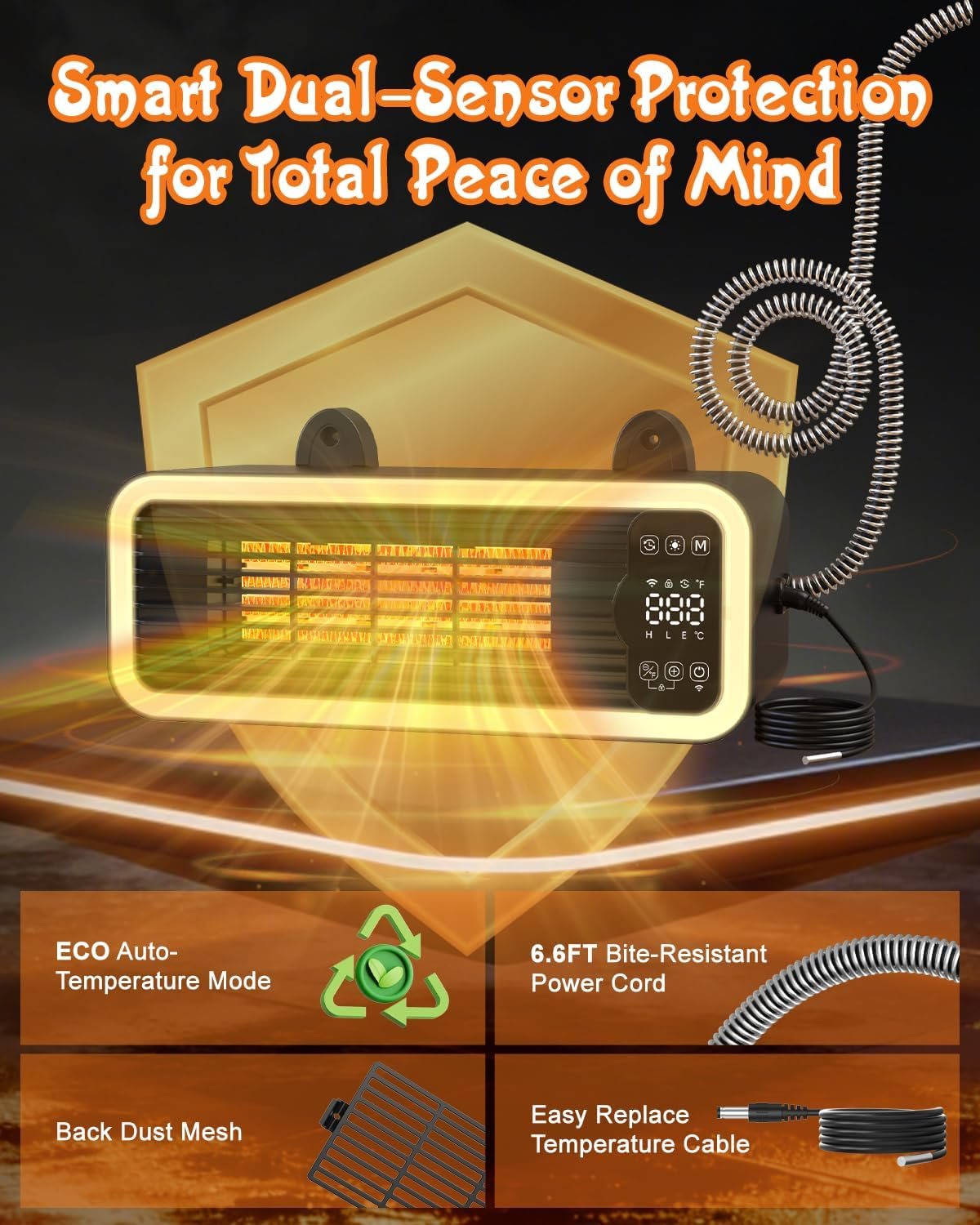
The heater uses two overheating safeguards: automatic shut-off when the set temperature is reached and a hard power cutoff at 75°C to prevent dangerous thermal runaway. The casing is flame-retardant and the vents are made of high-temperature-resistant plastic.
Since pets can be unpredictable, having redundancy in safety mechanisms dramatically lowers the chances of a thermal incident. The cut-off at 75°C is a critical last-resort protection if other systems fail.
Anti-chew cord and hair filter
The reinforced anti-chew cord helps protect against curious chewers looking for a new toy. The detachable filter stops hair and lint from entering the fan housing, which both safeguards airflow and reduces fire risk.
Because many pet environments have loose fur and dust, the ability to remove and clean the filter simplifies maintenance and extends the heater’s effective lifespan.
Noise and fan behavior
You’ll want your pets to sleep calmly, and the unit’s claimed sub-45 dB operation is designed to keep noise unobtrusive. The fan is engineered to run gently while still moving air for even heat distribution.
Low noise is especially important for skittish animals or poultry that can be disturbed by unfamiliar sounds.
Hair-resistant fan
The fan includes smart mechanisms that detect and prevent hair buildup from restricting airflow. That means fewer performance drops and less risk of fan-related failures.
In practice, this reduces maintenance frequency and helps the heater run smoothly over extended periods, even in hairy environments.
Measured noise levels
Under normal operation you’ll generally hear a quiet hum, rarely anything that would wake a sleeping pet. The noise remains low unless the heater is working very hard in extreme cold, at which point the sound may increase slightly.
Comparing this heater to open-coil or rotor-based alternatives, you’ll find it noticeably quieter for most daily conditions.
Installation and design
You can mount the unit on a wall or place it freestanding, giving you flexibility if your space changes over time. The overall look is functional with removable “ear” accessories if you want a friendlier theme for your pet’s environment.
The unit’s dual-installation options make it adaptable for different shelters and small outbuildings.
Wall mounting vs free placement
If you mount the heater, you’ll benefit from stable placement and better protection from curious paws and hens. Freestanding placement is simpler for temporary setups or when wall installation isn’t feasible.
Follow the included mounting instructions to ensure proper clearance and secure mounting. Keep the temperature probe positioned away from direct heat sources to get the most accurate readings.
Aesthetic and accessories
You can customize the heater with removable “ear” accessories to give it a softer look that fits pet spaces. Soft ambient lighting adds a calm visual cue that the unit is powered on without being intrusive.
These aesthetic touches are small but friendly additions that make the unit feel designed for pets rather than adapted from a human appliance.
Maintenance and cleaning
You’ll want to perform routine maintenance to keep the heater running reliably, especially in dust- and hair-prone environments. Regularly cleaning the detachable filter and checking the fan area will reduce the likelihood of blockages and improve efficiency.
A maintenance routine also helps you notice wear on the anti-chew cord or the probe cable before they become a problem.
Filter cleaning and replacement
Remove and clean the detachable filter on a schedule based on how much hair and lint collects in your space. If you notice reduced airflow or increased noise, that’s a sign the filter needs attention.
Replacement filters may be required over the years; check the manual for part numbers and recommended cleaning intervals to prolong component life.
Sensor and probe care
Keep the 2-meter temperature probe clean and positioned where your pet spends time, but away from drafts or direct sun. Inspect the cable periodically for frays or damage, especially if animals can reach it.
Damaged probe cables can give incorrect temperature readings, so replace a compromised probe promptly to keep controls accurate.
Energy use and running costs
You’ll want to weigh warmth against electricity costs. Running at full 1200W consumes more power than 850W or ECO modes, but the faster heat-up and better temperature control can reduce runtime and overall costs in many situations.
Using the timer and ECO settings strategically helps reduce consumption while keeping your pet comfortable.
Comparing 1200W vs 800W
Compared to an 800W heater, the 1200W high mode provides about 50% more power, meaning faster heat-up times and better performance in spaces up to 600 ft³. Faster heat-up can translate to shorter run times and ultimately similar or only slightly higher energy use depending on how you operate it.
If your enclosure is well-insulated, you may rarely need the full 1200W, and running lower power settings will save money while maintaining comfort.
ECO mode and timer savings
ECO mode is designed to minimize power draw while maintaining a comfortable environment, and the 24-hour timer lets you run heat only when needed. You can program the heater to turn on before cold periods and switch off when temperatures are stable, which reduces wasted energy.
If you schedule correctly and combine insulation improvements, your running costs can remain modest even through colder months.
Use cases and practical tips
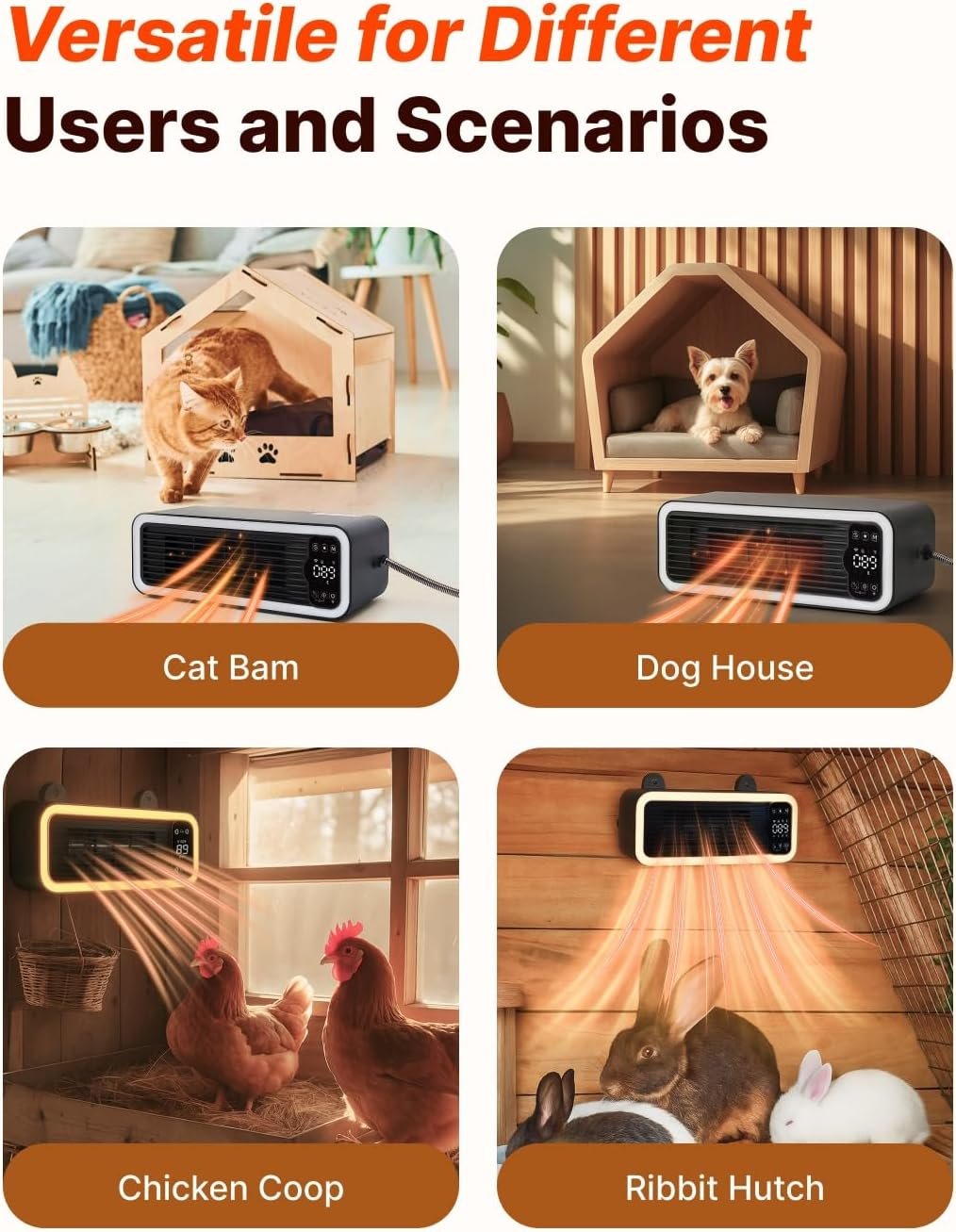
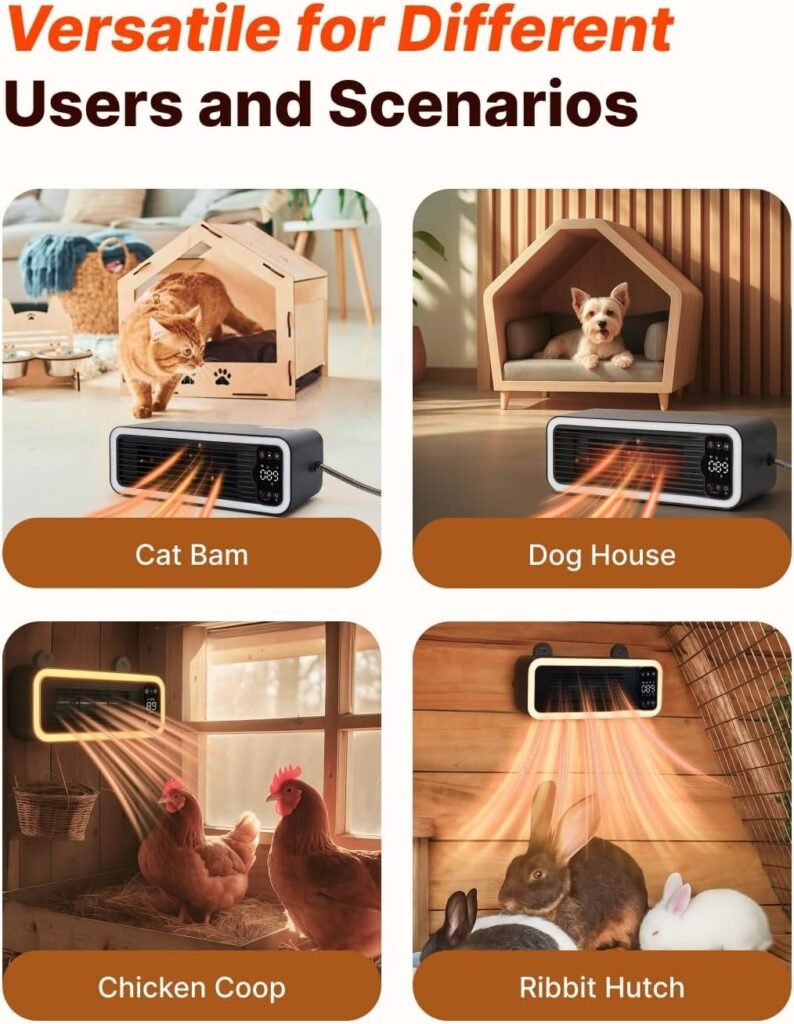
You’ll want to match heater usage to the unique needs of each animal and shelter type. This heater is versatile enough for dog houses, cat shelters, rabbit cages, chicken coops, and small garages—but how you use it matters.
Here are practical suggestions that will help you get the best performance while protecting your animals.
For dog houses
Position the probe near your dog’s bedding but not directly against a blanket or wall so it reads ambient air temperature. If your dog chews, route the anti-chew cord behind a barrier or mount the unit out of reach to prevent damage.
Insulate the dog house to reduce heating time and energy use. Combine this heater with insulating panels or weatherproof baffles for the most reliable warmth.
For cat shelters and rabbit cages
Cats and rabbits appreciate steady, gentle heat more than strong blasts, so ECO or Low mode often works best. Make sure any probe cable is tucked away and secured so curious paws can’t tangle or chew it.
Place the heater where it warms the overall shelter rather than a single spot, so animals can choose the most comfortable area.
For chicken coops and garages
Chickens need protection from cold drafts and wet conditions; position the heater to reduce humidity and keep roosting areas warm without blowing directly on birds. In garages or insulated small sheds, wall-mounting can free floor space and reduce the chance of accidental knocks.
Avoid warming areas where flammable bedding could accumulate right against the heater; maintain safe distances as recommended in the manual.
Troubleshooting common issues
You’ll eventually encounter minor problems; knowing simple fixes will save time and frustration. Many issues are related to connectivity, sensor placement, or accumulation of hair and dust.
Addressing problems promptly also prolongs the unit’s lifespan.
App connectivity problems
If the app won’t connect, first ensure the heater and your phone are on the same network and that there’s adequate signal. Restart the heater and your router if needed, and re-pair if the initial setup fails.
If Wi-Fi doesn’t reach your pet area, consider a Wi-Fi extender or use the infrared remote/manual controls as a reliable fallback.
Fan or noise issues
If you notice excessive noise or diminished airflow, check and clean the detachable filter and inspect the fan area for hair buildup. The hair-resistant feature helps prevent clogging, but periodic cleaning is still necessary.
If noise persists after cleaning, consult the manual and contact customer support—there may be a mechanical or bearing issue needing professional attention.
Temperature probe errors
Inaccurate temperature readings usually come from incorrect placement or a damaged probe cable. Move the probe to a location that represents the animal’s environment and keep it out of direct airflow or heat sources.
Replace the probe if you see visible damage or inconsistent readings that persist after repositioning.
Pros and cons
You’ll want to weigh the benefits against limitations to decide if this heater fits your situation. Below is a balanced look so you can make an informed choice.
This heater packs strong safety features, multiple control options, and a useful external probe. It’s built with pet-specific safeguards and offers flexible installation.
Pros:
- High-power mode (1200W) for fast heating when needed.
- Accurate temperature control via a 2 m external probe.
- Three control methods: app, infrared remote, and manual buttons.
- Dual safety cutoffs and flame-retardant casing.
- Hair-resistant fan and detachable filter for easier maintenance.
- Reinforced anti-chew cord designed for pet environments.
- Quiet operation under 45 dB and UL certification.
Cons:
- Requires electricity; not suitable for remote areas without power.
- Effectiveness depends on insulation of the enclosure; poorly insulated spaces may still struggle in extreme cold.
- App control needs Wi-Fi coverage at the pet location.
- Replacement parts (filters, probes) may be an ongoing cost.
Alternatives and what to consider before buying
You’ll want to compare this heater to other pet-safe options and consider your individual circumstances. Look at oil-filled radiators for silent heat, heated pads for localized warmth, or thermostatically controlled lamps for targeted radiant heat.
Prioritize safety, insulation, and the size of the space you need to heat. If you need portability or battery backup, you may prefer alternative units. For consistent, enclosed-space heating with smart control, this heater is a strong candidate.
Installation checklist
You’ll avoid common pitfalls by following a short checklist during setup. Correct installation ensures both safety and performance for the long term.
- Confirm the mounting location provides good airflow and is away from flammable bedding.
- Securely mount the unit to prevent tipping and keep it out of reach of animals if possible.
- Place the external probe at animal level and away from direct heating output.
- Plug into a properly rated outlet and avoid extension cords unless rated for the load.
- Test app and remote control functions before leaving the heater unattended for long periods.
Tips for maximizing comfort and efficiency
You’ll get the most out of the heater by pairing it with simple, cost-effective practices. These tips will help you maintain comfort without excessive energy bills.
- Add insulation to the shelter—simple foam panels or weather stripping reduces heat loss.
- Use ECO mode and the 24-hour timer to avoid unnecessary run time.
- Position bedding and shelters so animals can move into or away from the heat source.
- Check and clean the filter monthly during heavy shedding seasons.
- Secure the probe and cords to eliminate chewing or accidental unplugging.
Safety reminders
You’ll want to follow a few basic safety rules every time you use an electric heater around animals. These precautions reduce risk and help you maintain a secure environment.
- Always monitor new setups and check the system regularly for wear or damage.
- Maintain recommended clearances from bedding and combustible materials.
- Don’t submerge the unit or expose it to persistent moisture or flooding.
- Replace damaged cords, probes, and filters promptly; do not attempt to run the heater with compromised parts.
Warranty and customer support expectations
You’ll typically find a manufacturer warranty and some level of customer support for UL-certified products. Keep your receipt and registration info in case you need service or replacement parts.
Contact the seller or manufacturer for warranty periods, included parts, and support hours. Document any issues with photos or logs to speed up any claim process.
Final verdict
If you want a pet-focused electric heater that combines strong power, accurate probe-based temperature control, and multiple safety features, this model is a solid choice. Its smart controls and quiet operation make it well-suited to a wide range of animal shelters, provided you pair it with proper insulation and routine maintenance.
You’ll likely find its combination of safety, convenience, and heating performance a meaningful upgrade from more generic heaters, particularly in scenarios where pet safety and consistent ambient temperature are top priorities.
Disclosure: As an Amazon Associate, I earn from qualifying purchases.