800W Dog House Heater review
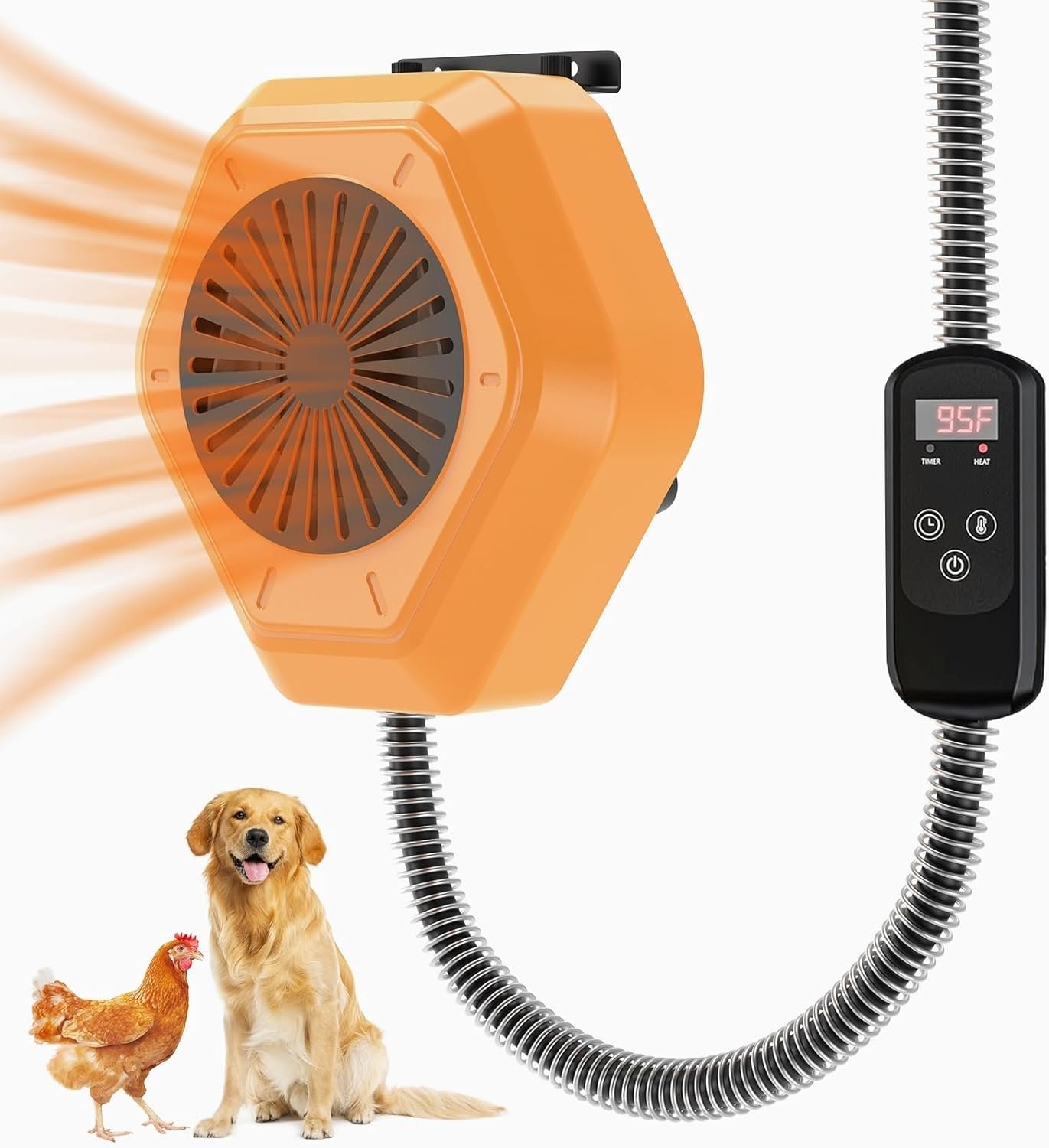
?Wondering whether the 800W Dog House Heater, Wall Mount, 10ft Anti Bite Cord, Waterproof Control, Outdoor Pet Heater Warmer for Chicken Coop Kennel Barn Cat Cage Rabbit Livestock (800, Watts) is the right choice for your outdoor pet space?

Product overview
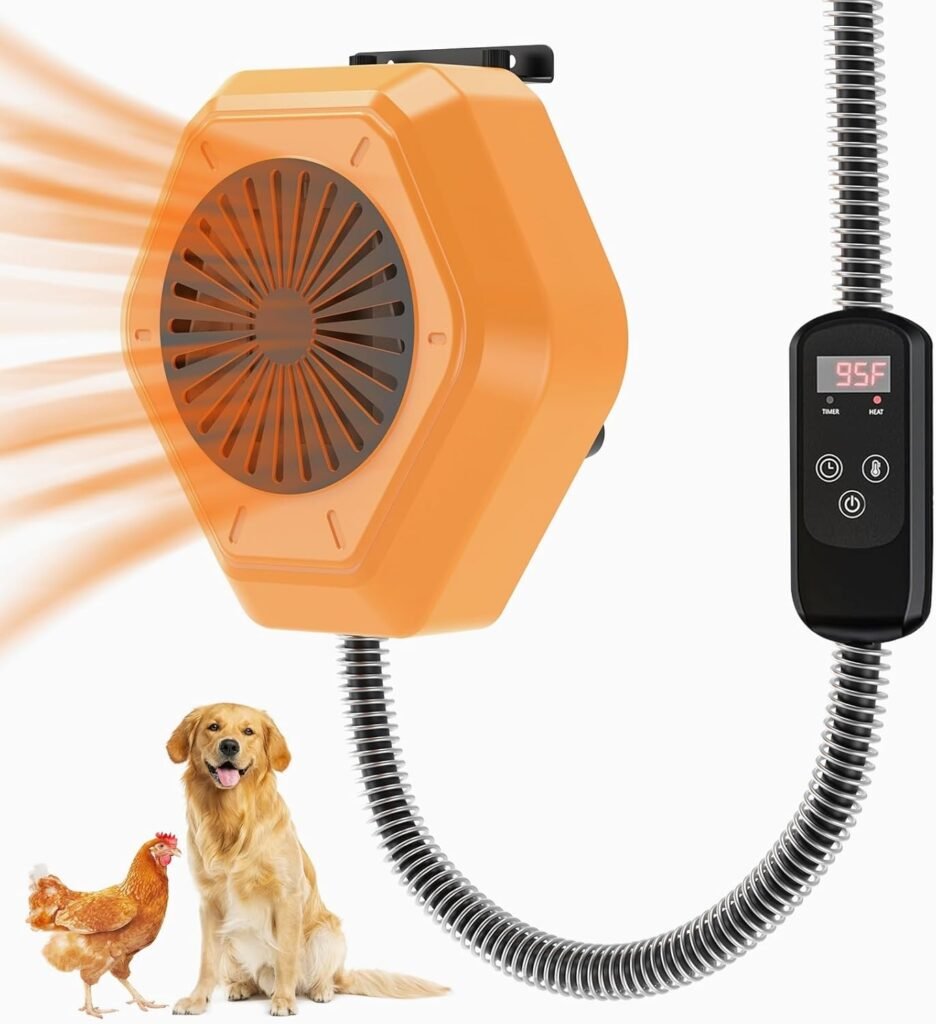
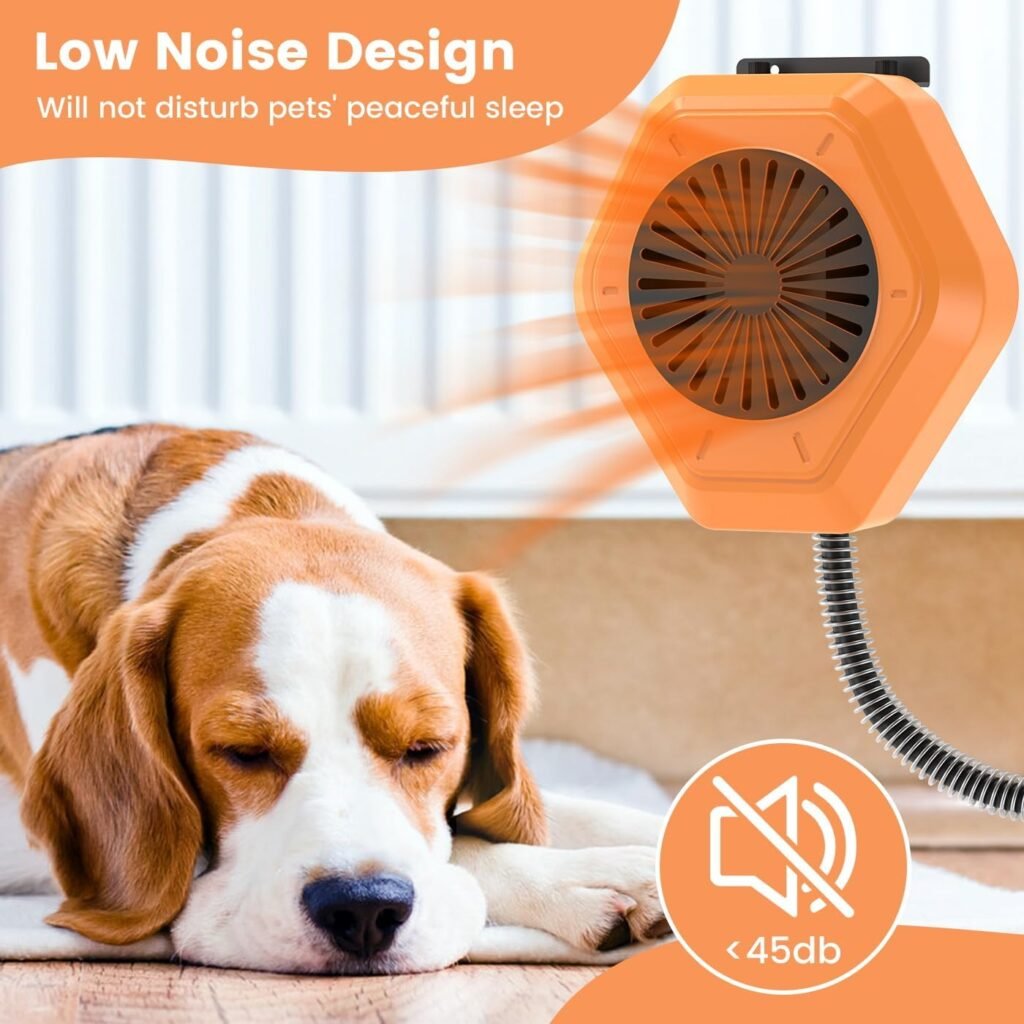
You want a heater that keeps outdoor pets comfortable without constant supervision, and this 800W unit aims to do exactly that. It’s a wall-mounted, forced-air heater with two power settings, a 10ft chew-proof cord, and weather-resistant controls designed specifically for kennels, coops, and other small animal shelters.
What the product claims to do
You’ll find it advertised as a fast-heating, low-maintenance solution for small outdoor enclosures, able to warm a space up to around 350 cubic feet. The manufacturer highlights the 800W high / 400W low settings, a built-in fan for even air distribution, chew-resistant cording, and easy-to-clean vents and filter.
Who this is made for
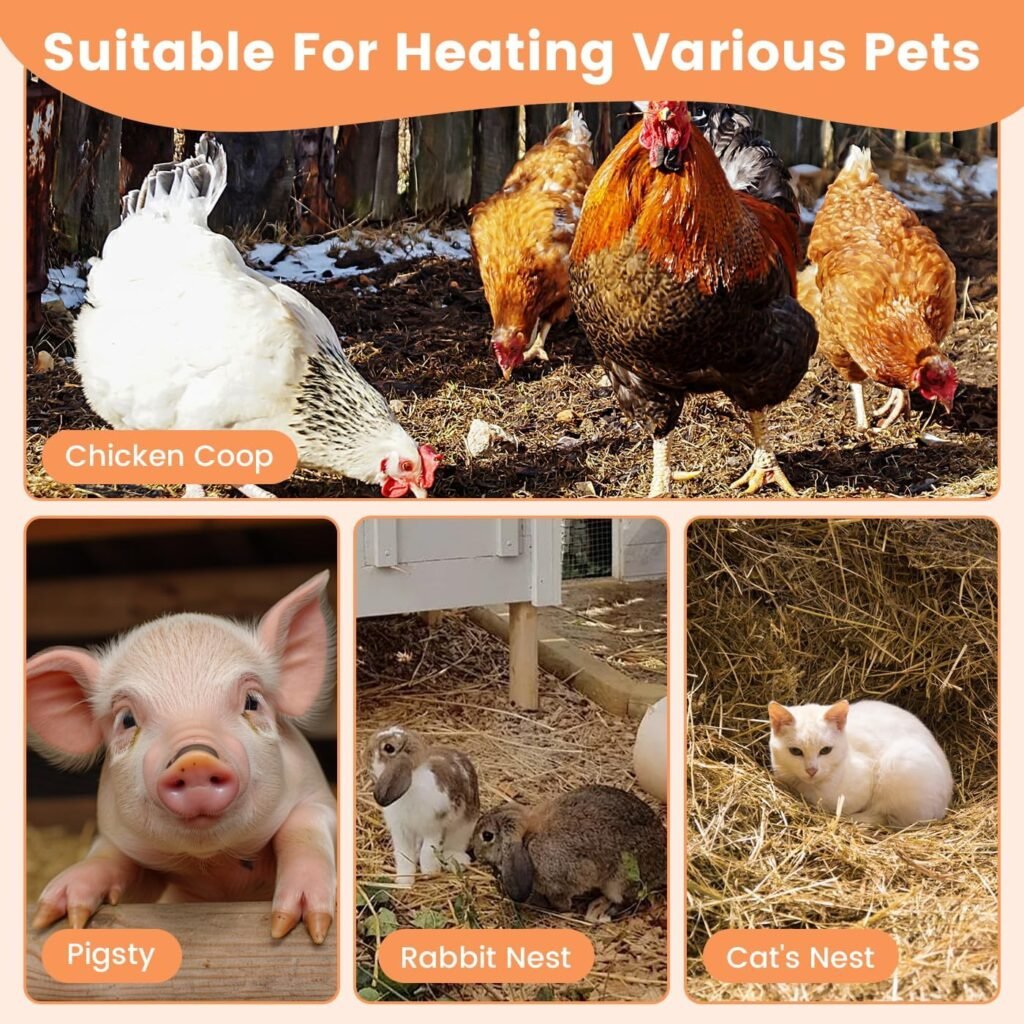
If you keep dogs, chickens, rabbits, barn cats, or other small livestock in unheated or semi-protected shelters, this heater is designed for your needs. You’re likely interested in something compact, wall-mounted, and focused on safety for animals that might otherwise be exposed to severe cold.
Key specifications at a glance
You’ll want clear specs to evaluate fit and performance for your space. The table below summarizes the main features and claimed performance metrics so you can compare quickly.
| Feature | Specification / Note |
|---|---|
| Model name | 800W Dog House Heater, Wall Mount, 10ft Anti Bite Cord, Waterproof Control, Outdoor Pet Heater Warmer for Chicken Coop Kennel Barn Cat Cage Rabbit Livestock (800, Watts) |
| Power settings | 800W (high), 400W (low) |
| Heating method | Forced air (built-in fan) |
| Coverage | Up to 350 ft³ (manufacturer claim) |
| Cord length | 10 ft insulated metal chew-proof cord |
| Mounting | Wall-mounted |
| Controls | Waterproof control (on unit) |
| Filter / cleaning | Back removable filter, mesh vents for easy wipe-down |
| Suitable for | Dog houses, chicken coops, cat houses, rabbit cages, barn use |
| Outdoor rating | Intended for outdoor/kennel use (verify local electrical safety needs) |
| Weight / dimensions | Not specified in product details (check product listing) |
| Safety features | Chew-proof cord, splash/water-resistant control, fan guard mesh |
| Typical uses | Kennels, coops, barns, rabbit hutches, cat houses, other small livestock sheds |
Heating performance and coverage
You want to know how warm the unit will make your pet’s space and whether it will reduce cold-related risk. The unit uses a fan to blow heated air into the enclosure, which helps mix warm air and minimize cold spots more than a simple radiant heat plate would.
How the two heat settings behave
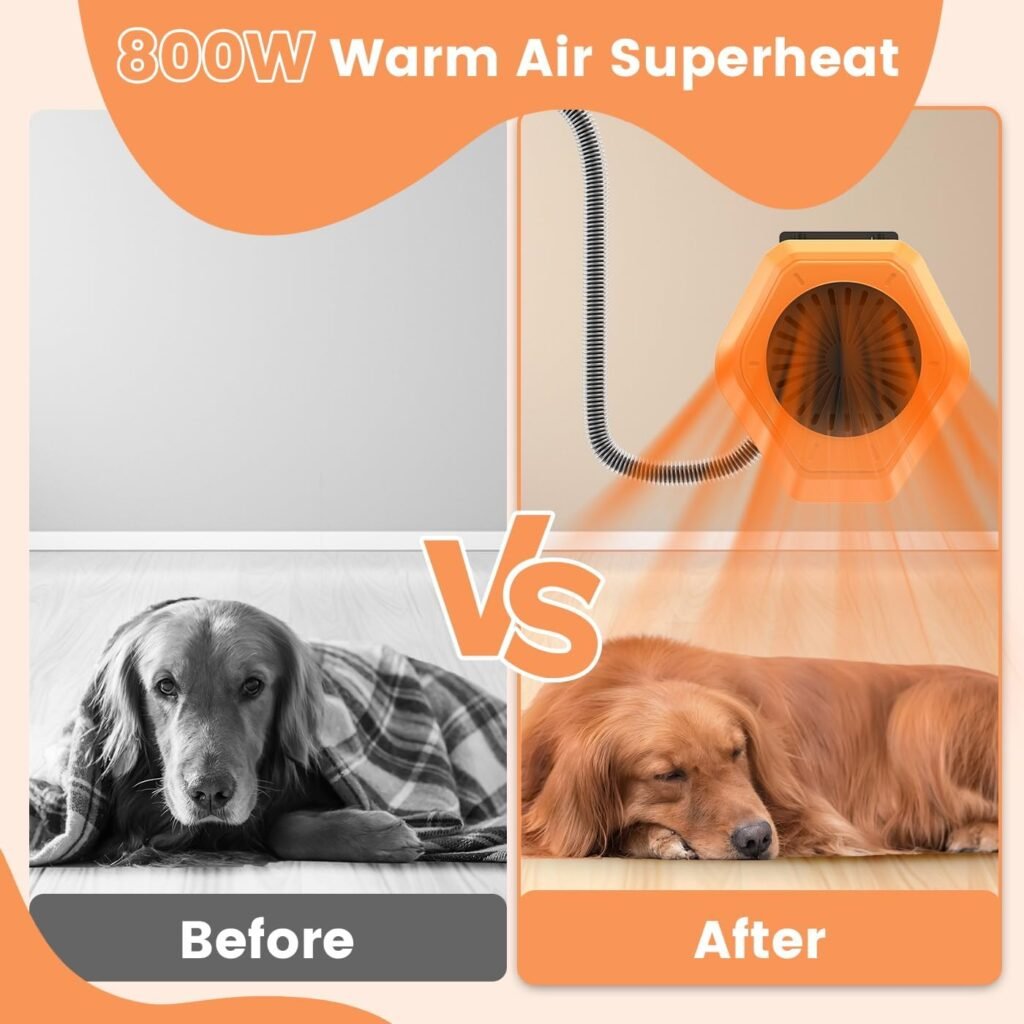
You’ll use 800W when temperatures are bitter and 400W for milder cold or to maintain temperature overnight. The higher setting produces faster heat and stronger air movement, while the lower saves energy and is quieter.
Realistic coverage expectations
The manufacturer states the heater covers up to about 350 cubic feet, which is a useful guideline. You should consider actual enclosure insulation, wind exposure, and how many animals are present—these all affect how warm the space will feel. If your kennel or coop is drafty or has large gaps, you’ll get less effective heating than the specification suggests.
Energy usage and cost estimate
You care about running cost, especially when leaving a heater on for long stretches in winter. The heater’s power draws directly determine energy use and cost.
Calculating electricity cost
At full power (800W = 0.8 kW), running the heater continuously for one hour uses 0.8 kWh. If your electricity rate is $0.15 per kWh, that’s roughly $0.12 per hour. On low (400W = 0.4 kW), that’s about $0.06 per hour. If you run the heater 8 hours per day on average, that’s about $0.96/day at 800W or $0.48/day at 400W based on the $0.15/kWh example.
Ways you can save on energy
You’ll cut costs by improving insulation in the enclosure, using the lower setting whenever possible, and combining the heater with insulated bedding or windbreaks. You might also consider a thermostat or timer (sold separately) to avoid unnecessary continuous operation.
Installation and placement
You need safe, secure mounting and correct placement to protect animals and the heater itself. This unit is designed for wall mounting to keep it out of reach and to blow warm air across the floor of the enclosure.
Mounting best practices
Mount the heater at a height that distributes warm air without directing it straight onto animals; about head height for the animals is typically good. Use sturdy screws into a stud or a solid mounting surface and follow the included template or instructions. Make sure the mounting orientation keeps the control panel and power connections sheltered from direct rain or heavy moisture.
Cord management and anti-chew considerations
The included 10ft insulated metal chew-proof cord reduces the risk of animals biting through power cable insulation. Still, you should route the cord out of reach inside conduit or protect it further with metal conduit or armored cable if available. Plug the unit into a GFCI-protected outlet for outdoor safety.
Safety features and concerns
You’ll value safety for both animals and your property. The product includes several designed-in safety elements, but you’ll also need to practice common-sense safety steps.
Built-in safety elements
You’ll find a mesh guard over the fan, a chew-proof insulated cord, waterproof control components, and the ability to wall-mount the unit out of reach. The back filter prevents hair and debris from entering the heater fan area, and it’s removable for cleaning.
Additional safety steps you should take
Always use a GFCI-protected circuit for outdoor plug-in appliances, and avoid placing the heater where bedding or loose materials can sit directly against vents. If you’re using the heater in an environment with flammable bedding or straw, maintain clearances and consider safer bedding choices. Don’t run the unit unattended in enclosed spaces without adequate ventilation.
Build quality and materials
You want the unit to hold up to outdoor conditions and animal environments, and this heater appears built with practical durability in mind.
Exterior and inlet design
The unit houses a metal-reinforced cord and mesh intake vents to reduce hair and debris entry. The control face is described as waterproof, which helps in damp or misty conditions, though you should still provide some shelter from direct water exposure.
Longevity considerations
Regular cleaning of the mesh vents and back filter will extend the life of the fan and heating elements. Keeping the unit mounted out of direct exposure to violent weather and away from corrosive conditions (salt spray, ammonia buildup in some barns) will help preserve components.
Noise and animal comfort
You don’t want a heater that scares or stresses animals. Because this model uses a small built-in fan, it will generate some noise, especially on the higher 800W setting.
How animals typically react
Most dogs, chickens, and small livestock acclimate to the low-level hum of a fan heater, particularly when the sound is consistent and not overly loud. Puppies or more anxious animals might take a few uses to get used to it.
Noise mitigation tips
You’ll minimize disruption by using the low setting at night, providing insulated enclosures that reduce echo, and placing the heater so the fan isn’t pointed directly at animals’ living areas. If noise is a major concern, consider locations where the fan noise won’t carry into your living space.
Cleaning and maintenance
You care about keeping the heater working safely year after year; routine maintenance is simple and practical.
Regular cleaning tasks
Wipe the mesh vents to remove hair and dust and remove the back housing to clean or replace the filter. Clean the exterior surfaces periodically with a damp cloth (unplug the unit first) and ensure no debris is blocking intake or exhaust.
Annual checks
At least once per year inspect wiring for damage, test the integrity of the chew-proof cord, and ensure the mounting hardware is secure. If you notice unusual smells, noises, or performance drops, discontinue use and have a qualified technician inspect the unit.
Pros and cons
You want a fair assessment to decide whether this heater suits your setup. Here’s a balanced look at strengths and limitations.
Pros
- You can choose two power settings (800W/400W) for flexibility.
- The 10ft insulated metal chew-proof cord is a strong safety feature for animal environments.
- Wall-mounting keeps the unit out of reach and saves floor space.
- Forced-air design distributes heat more evenly, reducing cold spots.
- Mesh vents and removable back filter make cleaning straightforward.
- Designed for a variety of animals and small enclosures.
Cons
- Fan noise may bother noise-sensitive animals or people nearby, especially on high.
- Coverage claims assume decent insulation and limited drafts; real-world results can vary.
- It relies on electricity and must be used with appropriate outdoor-rated outlets and GFCI protection.
- Some product listings omit exhaustive specs (weight, exact dimensions), requiring you to double-check before purchase.
Comparison to other types of pet heaters
You’re likely comparing forced-air units like this one to radiant plates or heat lamps. Each type has tradeoffs.
Forced-air vs radiant heat plates
Forced-air heaters heat and move air, which can warm spaces more evenly, while radiant plates directly warm objects and animals without heating the full air volume as quickly. You’ll prefer forced-air when you need to warm the entire enclosure volume, and radiant plates when you want a focused warm spot for animals to lie against.
Heat lamp comparison
Heat lamps provide strong localized heat but can be a fire risk with bedding or flammable materials. This wall-mounted heater reduces direct-fire risk and spreads warmth more evenly, which is safer for many multi-animal enclosures.
Installation checklist
You should follow a clear checklist to get the heater operating safely and effectively.
- Choose a mounting location sheltered from direct rain and wind, ideally on a solid wall or stud.
- Confirm power outlet is GFCI-protected and can handle the heater load.
- Securely mount the heater using recommended screws and anchors.
- Route the 10ft chew-proof cord out of animals’ reach and consider conduit for extra protection.
- Plug in and test both power settings, observing heat output and fan noise.
- Verify the unit is stable and not vibrating against the wall.
- Inspect again after 24 hours of operation for any smells, overheating, or unusual behavior.
Troubleshooting common issues
You’ll find most problems are simple to diagnose and fix.
Heater won’t power on
Check the outlet with another device, confirm the plug is secure, and ensure your GFCI hasn’t tripped. If the unit still won’t start, check the manual for a reset procedure or contact customer service.
Reduced heat or airflow
Unplug the unit and clean the mesh vents and back filter. Ensure animal hair hasn’t clogged the intake grill. If cleaning doesn’t restore airflow, the fan motor may need inspection.
Excessive noise
Tighten mounting hardware and ensure the unit is mounted flat against the wall. Clean the fan and check for debris. If noise continues, the fan motor bearings may be wearing out and require professional service.
Accessories and complementary gear you should consider
You’ll get the most value and safety by pairing the heater with a few accessories.
- GFCI-protected outdoor outlet if you don’t already have one
- External thermostat or temperature controller to prevent overuse
- Heavy-duty outdoor timer for scheduled operation
- Conduit or armored cable for extra cord protection
- Insulating panels or weatherproofing strips for your enclosure
Real-life use cases and scenarios
You want practical examples of how this heater performs in typical settings.
Single dog kennel in moderate winter
If your dog stays in a small, insulated kennel, using the heater on low overnight will usually keep the space cozy. Combine with insulated bedding and a windbreak for best results.
Chicken coop in cold, dry winter
For chickens, the heater can prevent drafts and reduce cold stress when mounted high and aimed to provide general warmth. Keep bedding clean and avoid directing the warm air right onto flammable materials.
Rabbit hutch or cat house in semi-outdoor space
Rabbits and cats often appreciate a mild, steady heat source. Use the lower setting to maintain temperature without creating hot spots that could encourage heat stress.
Frequently asked questions (FAQ)
You likely have specific practical questions before buying or using this heater.
Is it safe for puppies and kittens?
Yes, when installed correctly and mounted out of reach, the unit is intended for small animals. Always route the cord out of reach and consider extra conduit so curious mouths can’t reach it.
Can I use it in heavy rain?
The controls are described as waterproof/resistant, but you should not expose the unit to direct heavy rain. Mount it in a sheltered location and avoid submersion or direct water spray.
Can it be used in large barns?
This heater is best for smaller enclosures up to the recommended coverage. For large barns you’ll need a more powerful system or multiple units spaced appropriately.
Warranty and customer support
You’ll want to understand what support exists if something goes wrong. Check the retailer or product listing for the specific warranty length and terms. Most sellers provide a limited warranty that covers manufacturing defects for a defined period; you should register the product if registration is offered.
What to do if you need service
Keep your purchase receipt and order details. Contact the seller or manufacturer with model and serial information, and be prepared to describe the issue and any troubleshooting steps you’ve already taken.
Final verdict — is this heater right for you?
You’ll find this 800W wall-mounted forced-air heater a practical, relatively safe solution for small outdoor animal spaces if you prioritize even heating, anti-chew protection, and easy maintenance. It’s particularly strong for situations where you need to warm an entire enclosure volume rather than only providing a single warm spot.
Who should buy it
You should consider this heater if you have a well-insulated small-to-medium kennel, coop, or hutch and want a fixed, out-of-reach, electrically powered solution with reasonable energy use. It’s a good fit when you want the flexibility of two power levels and a chew-proof cord.
Who should pick something else
If you need ultra-quiet operation, localized radiant heat, or a heater for a very large barn area, you may prefer other heating types or higher-powered commercial units. Always match heater style and capacity to your enclosure’s size, insulation quality, and the animals’ needs.
Buying tips and final recommendations
Before you click purchase, you’ll benefit from a few final checks to ensure the heater is the right fit for your situation.
- Measure the cubic footage of your enclosure and compare it to the 350 ft³ coverage claim, adjusting for drafts and insulation quality.
- Confirm outlet location and GFCI protection; install professionally if needed.
- Plan cord routing and extra protection so animals cannot access or damage the cable.
- Consider purchasing an external thermostat or timer for lower energy bills and better temperature control.
- Read recent customer reviews for real-world installation notes and potential quirks specific to the seller or production batch.
If you use the 800W Dog House Heater, Wall Mount, 10ft Anti Bite Cord, Waterproof Control, Outdoor Pet Heater Warmer for Chicken Coop Kennel Barn Cat Cage Rabbit Livestock (800, Watts) with attention to placement, protection, and maintenance, it can be a reliable addition to your animal care toolkit that helps keep pets and livestock safer and more comfortable in cold weather.
Disclosure: As an Amazon Associate, I earn from qualifying purchases.