PetSafe Stubborn Dog In-Ground Fence review
Looking for an invisible fence that can actually keep your stubborn dog safely contained while giving you flexibility and a neat yard?

Product overview: PetSafe Stubborn Dog In-Ground Fence – Invisible Pet Containment Kit
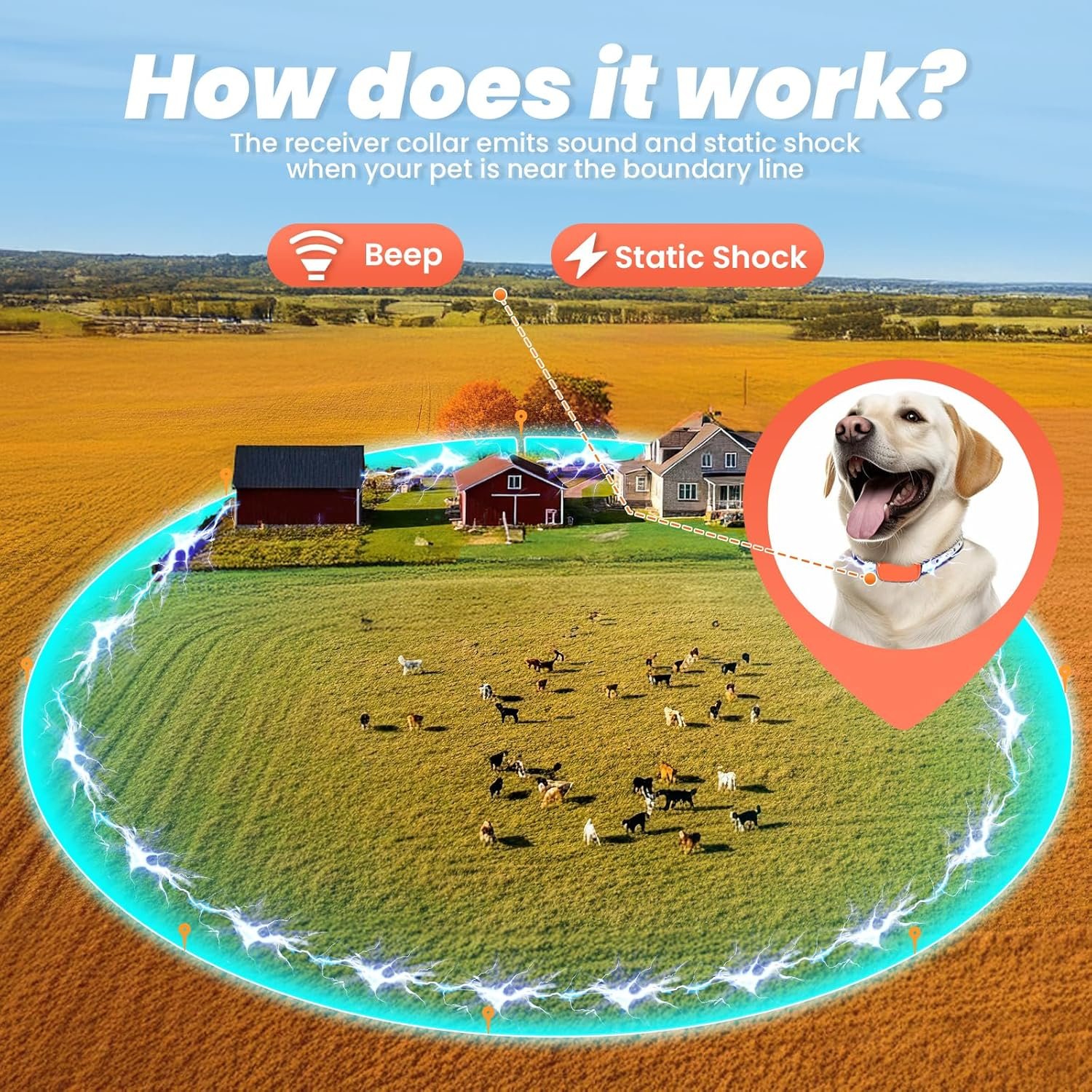
You’re looking at the PetSafe Stubborn Dog In-Ground Fence – Invisible Pet Containment Kit, designed to cover up to 1/3 acre with 500 ft of 20 gauge wire and intended for dogs older than 6 months weighing at least 8 lb. This system combines an in-ground boundary wire and a waterproof receiver collar with tone, vibration, and four levels of safe static correction so you can tailor the response to your dog’s temperament.
Quick specifications at a glance
Below you’ll find the core specs so you can quickly compare what this kit offers and what you’ll need for your yard and dog. Use this as a checklist to confirm the system fits your property size and the size and age of your dog.
| Feature | Specification |
|---|---|
| Coverage | Up to 1/3 acre (custom-shaped boundary) |
| Boundary Wire | 500 ft of 20 gauge wire included |
| Receiver Collar | Waterproof, adjustable (neck size 6–28 in) |
| Dog Requirements | Dogs older than 6 months, weighing 8 lb or more |
| Correction Options | Tone, vibration, 4 levels of safe static correction |
| Installation | Weekend DIY; two-person recommended |
| Manufacturer Experience | PetSafe — over 25 years of pet containment products |
| Recommended Use | Stubborn dogs requiring stronger correction levels |
Why this matters to you
Seeing the specs in one place helps you decide quickly whether the system fits your yard and dog. You can plan whether the 500 ft of wire will cover your layout, whether the collar neck range will fit, and how the correction modes match your dog’s temperament.
What’s included in the kit
You’ll get the essentials to build a functional in-ground containment system without buying extra pieces immediately. Knowing exactly what comes in the box will help you prepare and avoid mid-project runs to the store.
Box contents and extras to consider
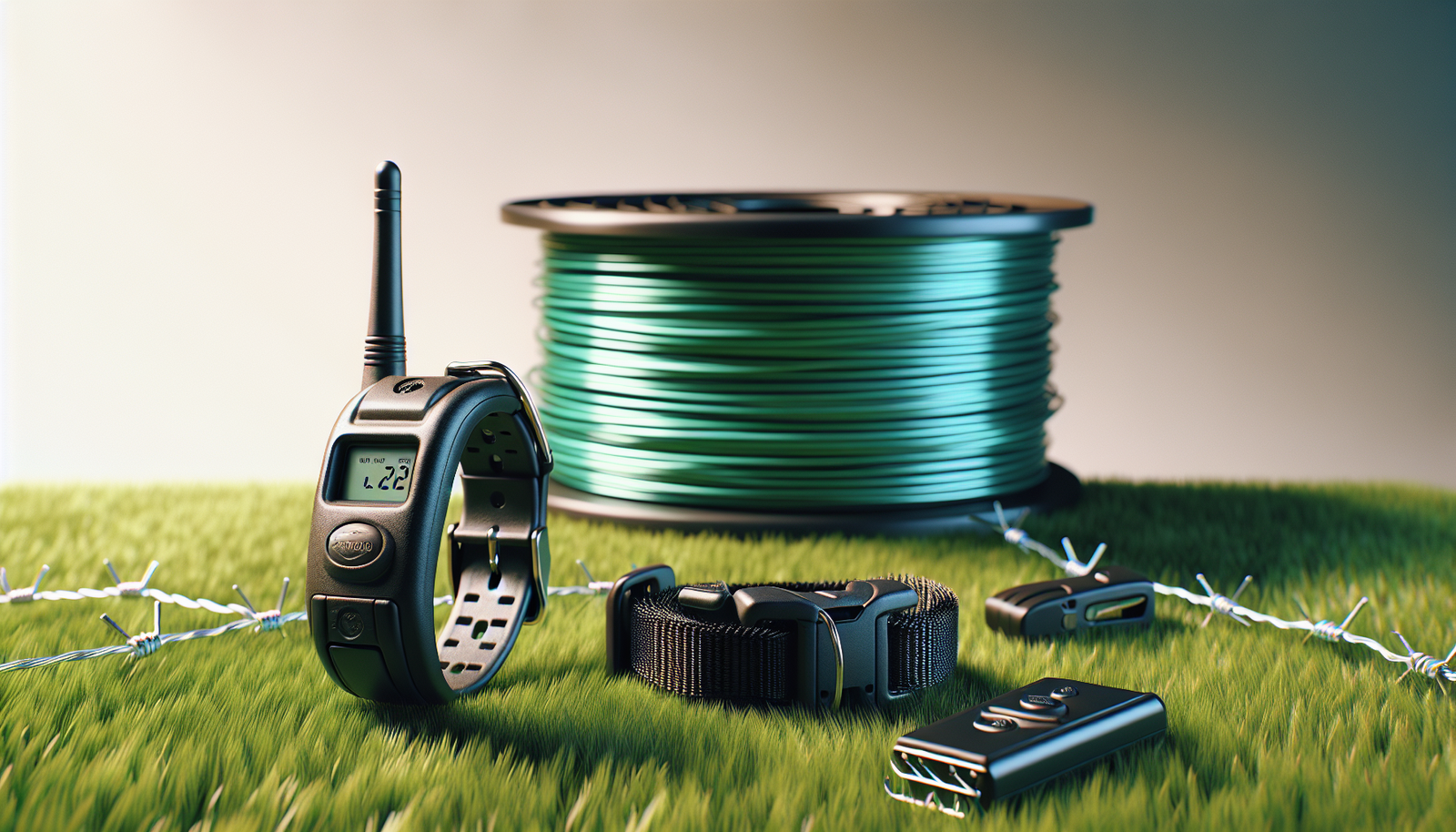
The kit typically includes the transmitter, 500 ft of 20 gauge wire, a waterproof adjustable receiver collar, flags for training, a transformer (power adaptor), splice connectors, and a quick start guide. You’ll want to check for a grounding rod and spare batteries or battery information for the collar so you’re ready for initial setup and testing.
Accessories you might add
While the kit is pretty complete, you might want wire staples, extra boundary wire, a longer power cord for the transmitter, replacement batteries, or additional receiver collars if you have more than one dog. Buying a few extra flags and a wire tester can speed up training and troubleshooting.
Installation and setup
You’ll handle this as a two-person weekend project most comfortably; one person lays wire and another pulls and secures it. The process is straightforward, but careful planning and a methodical approach will save you time and frustration.
Preparing your yard
Walk your intended boundary and sketch a map that includes garden beds, trees, and areas you want the fence to exclude or include. Mark any utilities before digging and plan for high-traffic crossing points where you’ll need to train your dog more intensively. Clearing thorny brush and trimming grass can make the wire-laying process easier and extend the life of the wire.
Laying the wire and making connections
You’ll lay the wire around the perimeter of your chosen area and return the wire to the transmitter to form a complete loop. Splice connectors help join the ends and repair breaks. Use appropriate staples or bury the wire about 1–3 inches below ground for protection, and secure it with temporary flags for training. Test the loop at the transmitter before burying any wire to ensure continuity and correct signal.
Testing and calibration
Once the loop is complete, set the transmitter and test the boundary using the collar on test mode. Walk the perimeter to confirm you get an accurate tone or correction at the boundary line. Calibrate the correction level gradually — start with tone, then vibration, and only use higher static levels if the dog ignores the milder cues. Finalize by burying the wire and removing training flags after your dog reliably respects the boundary.
Collar design and comfort
Your dog will wear the receiver collar often, so comfort, fit, and durability matter. The PetSafe receiver is waterproof and adjustable, designed for small through larger dogs with a 6–28 inch neck range, which gives you flexibility across dog sizes.
Fit and adjustability
You should ensure the collar sits snugly but not tight — you can usually fit two fingers between the collar and your dog’s neck. The wide adjustability means you can comfortably fit a puppy that will grow into the collar or small-breed dogs down to 8 lb. Regularly check for rubbing, hair matting, or irritation and re-adjust as needed.
Modes and static correction levels
You get tone and vibration cues before any static correction, which helps you train your dog to respect the boundary without immediate physical stimulation. If your dog is stubborn and ignores tone and vibration, you can step through four levels of static correction to find the minimum effective level. The levels are intentionally graduated so you can strike a balance between effectiveness and comfort.
Battery and waterproofing
The collar is battery-operated and waterproof, so you don’t need to remove it in rain or when your dog drinks from puddles. Make sure you follow the manufacturer guidelines for battery type and replacement intervals. Keeping spare batteries on hand will minimize downtime.
Containment performance
This product is built specifically for dogs who are less responsive to milder systems, hence the “Stubborn Dog” naming. Expect stronger correction options and consistent boundary performance if installed and tuned correctly.
Boundary accuracy and repeatability
Because the wire is buried, the boundary location is stable and predictable. The system emits a consistent signal along the buried wire so your dog gets a reliable cue at the same place each time, which reinforces training. You can create irregular or custom shapes to fit real-world yard layouts, unlike some wireless systems that favor circular zones.
Effectiveness with determined dogs
You should find the higher correction levels effective with dogs that previously slipped other systems — the graduated steps let you escalate only as needed. Pair the static correction with tone and vibration for maximal training effect. Still, very determined dogs can still try escaping, so consistent training and reinforcement are essential.
Dealing with boundary interference and escapes
If your dog tests the boundary repeatedly, increase training sessions and verify the collar function and fit. Use flags at first to create a visible line and retrain at spots where your dog repeatedly challenges the boundary. Check for wiring breaks, poor connections, or transmitter issues if the collar doesn’t respond where expected.
Training your dog for the system
You’ll need a training plan and patience to help your dog learn the boundary reliably. The training process is typically short but requires consistency and positive reinforcement to be permanent.
Introducing the flags and tone
Start by setting flags along the boundary and walking your dog on a leash towards the boundary until the collar emits the tone or vibration. Reward your dog for stopping and returning to the safe zone. Repeat short sessions every day until your dog consistently responds to the tone without advancing into the correction zone.
Conditioning to static correction safely
If your dog ignores tone and vibration, use the lowest static level that gets a responsive backward step. Pair the correction with immediate positive reinforcement once your dog returns to the safe area. This builds a clear association between staying inside the boundary and receiving rewards.
Reinforcing boundary habits
After your dog reliably responds on-leash, start off-leash supervised sessions while keeping training flags in place. Gradually increase freedom and remove flags only after weeks of consistent compliance. Keep periodic refreshers and use the collar as a backup rather than constant punishment — treat it as a training tool, not a substitute for supervision.
Safety and health considerations
You’re responsible for your dog’s welfare; using static correction requires attention to fit, skin health, and monitoring to prevent overuse. PetSafe’s systems are designed to be safe when used correctly, but you should follow guidance from trainers and vets.
Is static correction safe for your dog?
When used responsibly, brief, low-level static correction combined with tone and vibration is considered safe for most dogs older than six months. The collar is intended for dogs above the minimum weight and age thresholds to reduce risk. Consult your veterinarian if your dog has health issues, is elderly, pregnant, or has a known sensitivity to electrical stimulation.
Collar fit, skin checks, and allergies
You’ll need to check the contact points frequently for redness or hair loss — adjust the collar tension if you notice irritation and ensure the contact points sit on the skin. Remove the collar periodically to check skin health and prevent matting. If your dog shows signs of chronic irritation, consult your vet and consider switching the collar placement or protective measures.
Maintenance and durability
To keep your system working reliably, you’ll perform periodic checks of the transmitter, boundary wire, and collar. A little routine maintenance extends the life of the system and keeps your dog well-contained without surprises.
Wire and transmitter care
Inspect the wire for visible damage after storms, lawn work, or digging animals. If you encounter breaks, the 20 gauge wire is relatively easy to repair with splice connectors. Keep the transmitter in a dry, secure spot and check its power indicator periodically to confirm the loop’s continuity.
Receiver collar upkeep
Replace batteries as recommended and keep the contact points clean. Because the collar is waterproof, it withstands wet conditions, but you should still remove and dry the collar after prolonged submersion. Replace worn straps and ensure the receiver stays snug and properly aligned on your dog’s neck.
Troubleshooting common problems
When the system doesn’t behave as expected, stay methodical: test the transmitter, collar function, wire continuity, and training methods to identify the issue. Most problems are fixable with basic checks or minor repairs.
Collar not responding or false triggers
If the collar doesn’t respond at the boundary, first test the collar using the manufacturer’s test mode and verify the transmitter’s power and loop indicator. False triggers or intermittent corrections often point to loose connections, damaged wire, or nearby buried metal causing signal interference. Retrace the loop and use a wire tester to locate and fix the problem.
Unexpected “shocks” or inconsistent corrections
If corrections feel stronger than expected, lower the static level and reintroduce the tone and vibration cues. Make sure the contact points are clean and the device isn’t set too tightly, which can intensify sensation. If inconsistency persists, contact PetSafe support — they can guide you through diagnostics.
Pros and cons
You should weigh both strengths and limitations to decide whether this system fits your lifestyle and dog’s personality. Here are the salient advantages and potential trade-offs.
Pros
- Tailored correction levels and tone/vibration options give you flexibility for various temperaments.
- In-ground wire creates a precise, reliable boundary you can shape to your yard’s layout.
- Waterproof, adjustable collar fits a wide neck range and suits dogs from 8 lb upward.
- 500 ft of 20 gauge wire covers up to 1/3 acre, suitable for many suburban yards.
- PetSafe’s long track record and customer support provide peace of mind.
Cons
- Installation takes time and ideally two people; prepping and burying wire is a weekend commitment.
- The system requires training and follow-up; it’s not a set-and-forget solution.
- Determined escape artists may still test and challenge the boundary, requiring ongoing reinforcement.
- If you have multiple dogs, you’ll need additional collars (not always included in basic kits).
Comparisons: in-ground vs wireless vs physical fences
Choosing a containment approach depends on your priorities: aesthetics, cost, installation effort, and effectiveness. This section helps you weigh options relative to the PetSafe in-ground kit.
In-ground vs wireless systems
In-ground systems give you a custom-shaped boundary and consistent signal along the wire, while many wireless systems create circular zones and can be affected by terrain or interference. You should favor in-ground if you want precise borders around flower beds or driveways. Wireless systems are easier to set up but may offer less accuracy and flexibility.
Invisible containment vs physical fences
A physical fence gives a visible, solid barrier and can stop determined dogs without relying on training or correction. However, physical fences are often expensive and may not be allowable by HOA rules. Invisible in-ground systems give you a clean look and can be more cost-effective for keeping a dog contained where a physical barrier isn’t practical.
PetSafe customer support and company background
You’ll appreciate that PetSafe has a long history in pet containment solutions and offers customer support, training resources, and documentation to help you get the most from your system. If you run into unique yard or dog issues, professional help is available.
PetSafe support and resources
PetSafe provides step-by-step guides, videos, and a support hotline to help you through installation, tuning, and troubleshooting. Online communities and trainers often share real-world tips that can save you trial-and-error time.
Warranty and product reliability
PetSafe products are backed by years of engineering and customer feedback; you should check the specific warranty terms attached to your kit but expect reasonable support and replacement part availability. Keeping purchase receipts and registration will make warranty service easier if an issue arises.
Who is this product ideal for?
This kit is tailored for certain owners and dogs; knowing whether you fit the profile helps you decide faster. Consider your yard, your dog’s size and temperament, and how much time you’ll invest in training.
Ideal owner and dog scenarios
You should consider this if you have a yard up to 1/3 acre, want a neat invisible boundary, and have a dog older than six months weighing at least 8 lb who needs a stronger containment solution because of stubborn behavior. It’s ideal for owners who are comfortable doing a weekend DIY project and who will commit to a short training regimen.
When to consider alternatives
If you have multiple dogs and don’t want to buy additional collars, or your dog has severe health issues that make static correction inadvisable, consider alternatives such as a physical fence or an estate-level wired system with professional installation. If you have a very large property beyond 1/3 acre, you’ll need additional wire and possibly a larger system.
Cost and value considerations
Beyond the upfront price of the kit, you’ll want to factor in any accessories, additional collars, replacement batteries, and the time cost of installation and training. Overall, in-ground systems generally represent a good balance between performance and cost.
Initial cost vs long-term value
You’ll likely pay more upfront than a basic wireless unit, but the customization and reliability often translate to long-term satisfaction and fewer escapes. The 25 years of PetSafe experience and their customer support add intangible value that can be worth the investment for peace of mind.
Budgeting for extras
If you need extra wire, collars, or professional installation, build those costs into your budget. Also consider periodic expenses like replacement batteries and eventual receiver replacement if you have multiple dogs.
Frequently asked questions
These are common questions you’ll probably think of; the answers should help you prepare for real-world usage and decision-making.
Will the system hurt my dog?
When used correctly with proper fit and progressive training, the static correction is generally safe and designed to be uncomfortable enough to deter but not to injure. Always start with tone and vibration and only increase static to the minimal effective level; consult your vet if you have concerns.
How long does installation take?
A typical two-person weekend installation, including planning and training setup, takes a full day or a couple of shorter sessions. You’ll need further training sessions over days to weeks until your dog reliably respects the boundary.
Can the boundary be reshaped later?
Yes — you can adjust the wire path by moving and re-burying wire, though doing so requires short-term re-flagging and retraining for your dog to learn the new limits. Plan initial placement carefully to avoid frequent rework.
What if the wire gets cut?
You can repair 20 gauge wire with splice connectors included in the kit or purchased separately. Use a wire tester to identify the break, splice the wire, and seal the connector to maintain reliability.
How many dogs can I have?
Each dog needs its own receiver collar. The transmitter can usually handle multiple collars, but you’ll need to purchase extra receivers and ensure all collars are in working order and fit comfortably.
Final verdict
If you want a customizable, precise containment solution for a yard up to 1/3 acre, and your dog is older than six months and at least 8 lb, the PetSafe Stubborn Dog In-Ground Fence – Invisible Pet Containment Kit is a strong choice. You’ll get graduated correction options, a waterproof adjustable collar, and a configurable boundary that handles stubborn behaviors better than many lightweight systems.
Final recommendation for you
You should pick this system if you’re willing to invest a weekend in installation and a consistent training period to teach your dog the boundary. If you value clean yard aesthetics, precise boundaries, and adjustable correction levels that escalate as needed, this kit gives you a balanced mix of safety, flexibility, and manufacturer support to help keep your dog content and contained.
If you want, I can outline a step-by-step weekend installation plan tailored to your yard layout, or help you draft a training schedule for your dog’s temperament and age.
Disclosure: As an Amazon Associate, I earn from qualifying purchases.