Dog House Heater With Thermostat review
Have you been searching for a reliable way to keep your pet warm in cold weather without fussing over complicated wiring or bulky heaters?

Product Overview: Dog House Heater With Thermostat,Heated Dog House With 6FT Anti Chew Cord and 2 Heating Mode (300/600W), Safe Pet House Heater for Dogs Chicken Coops Rabbits
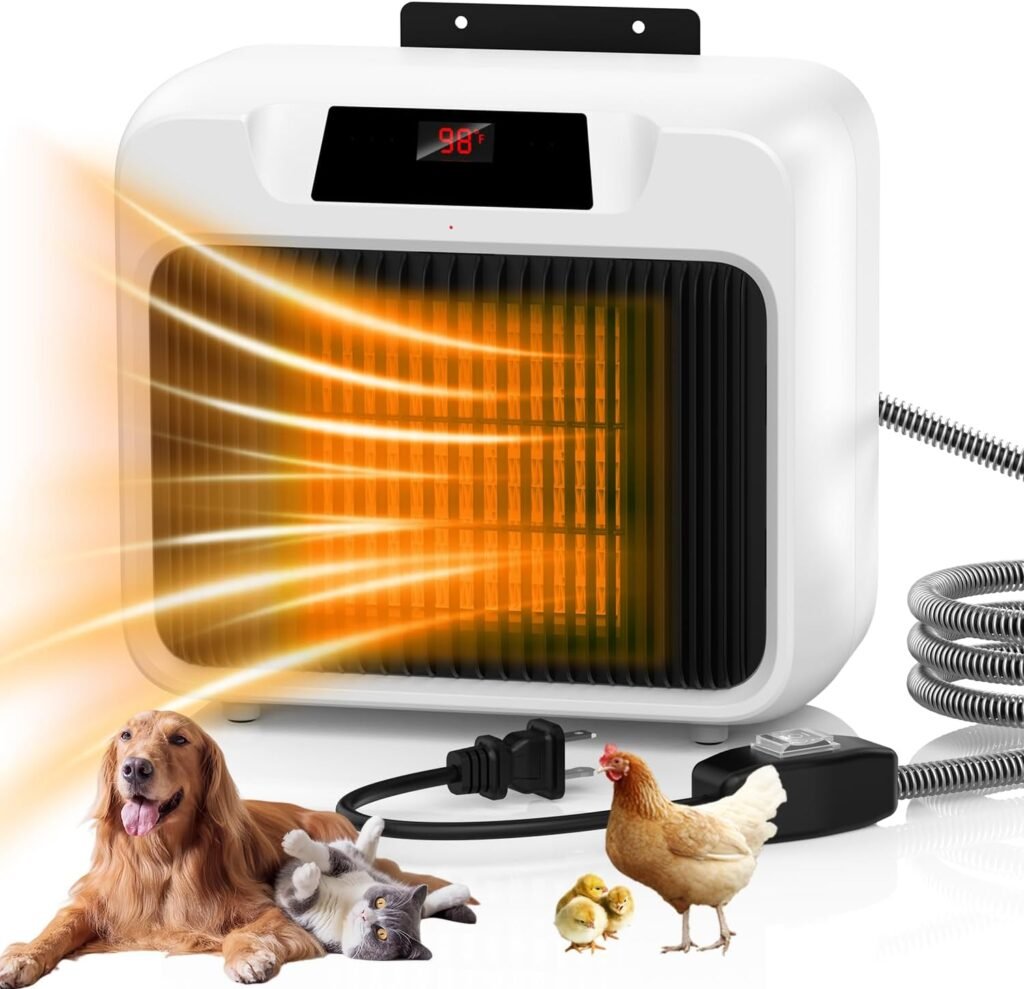
You’ll find this wall-mountable pet heater is built to provide steady, controlled warmth for small enclosures like dog houses, chicken coops, rabbit hutches, and other outdoor pet shelters. The unit combines a rapid-warmup PTC heating element, two power modes (300W and 600W), an upgraded thermostat, and safety-minded features like an anti-chew cord and insulated exterior.
What this product promises for you
The manufacturer designed the heater to heat up quickly (claimed 3-second warm-up), circulate air with an integrated fan, and regulate temperature automatically between about 95°F and 100°F (35–38°C). If you want an off-the-shelf heating solution that’s relatively simple to install and maintain, this product aims to meet those needs.
Key Features
You’ll appreciate that this unit focuses on practical features that matter in a pet environment rather than unnecessary bells and whistles. Below are the most important elements you’ll interact with regularly.
- 300W/600W selectable heating modes so you can balance warmth and energy usage.
- Upgraded thermostat that stops heating around 100°F and restarts under 95°F for a stable microclimate.
- 120V AC input and PTC (positive temperature coefficient) heating for stable, flameless warmth.
- Built-in fan for air circulation to warm up to around 150 cubic feet of enclosure volume.
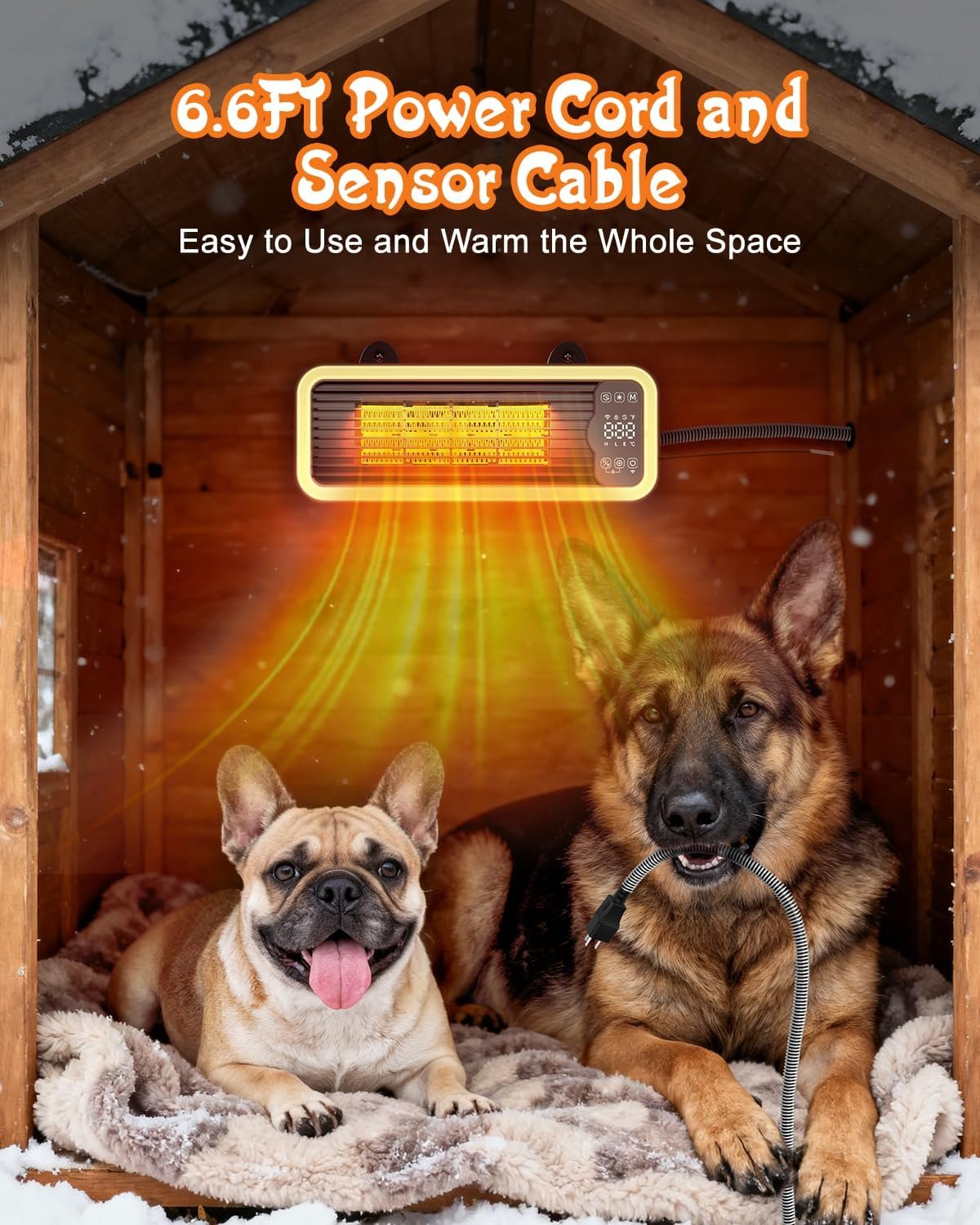
- 6-foot anti-chew cord that helps prevent pets from damaging the power cable.
- Insulated exterior surface to reduce burn risk if your pet touches the heater.
- Magnetic removable hair guard to simplify cleaning and remove trapped pet hair and dust.
- Independent safety bracket for straightforward wall-mounting and secure placement.
- UL and RoHS certifications for electrical safety and restricted hazardous substances compliance.

Specifications Table
This table breaks down the most important specs in a format you can skim quickly, which helps you decide if the unit will fit your needs.
| Specification | Detail |
|---|---|
| Input Voltage | 120V AC |
| Heating Modes | 300W / 600W |
| Heating Element | PTC (flameless) |
| Thermostat Range | Stops near 100°F (38°C), restarts below 95°F (35°C) |
| Heating Coverage | Up to 150 cubic feet (approx.) |
| Warm-up Time | Claims heating begins in ~3 seconds |
| Mounting | Wall-mounted with included bracket |
| Power Cord | 6 ft anti-chew cord |
| Safety Features | Insulated surface, overheat protection, anti-chew cord, functioning thermostat |
| Certifications | UL and RoHS |
| Removable Guard | Magnetic hair/dust guard for easy cleaning |
| Suitable For | Outdoor kennels, dog houses, chicken coops, rabbit hutches, small livestock shelters |
How to read the table for your shelter
If you measure your pet’s shelter volume in cubic feet and it’s under around 150 ft³, this heater should be able to warm that space effectively. If your shelter is larger, you’ll either need multiple units or an alternative heating solution.
Heating Performance
You’ll notice the heater is designed for consistent, gentle warming rather than heating to high temperatures. The PTC element provides a safe, flameless heat source that scales output as the unit warms.
The two power modes let you lower wattage during milder cold or boost it when temperatures drop. In practice, the integrated fan assists with circulation so heat distributes more evenly inside small enclosures. Expect a steady, moderate rise in temperature rather than a blast of heat.
Warm-up speed and perceived warmth
Because PTC heaters self-regulate, warm-up is quick from a user perspective—the unit begins producing noticeable heat within seconds. However, the time to raise the entire enclosure to a comfortable level will depend on your shelter’s insulation, external weather, and how much space you need to heat.

Thermostat and Temperature Control
You’ll get an “automatic comfort” approach with the upgraded thermostat. The heater stops producing heat when the air immediately surrounding it reaches about 100°F (38°C) and restarts when the temperature drops below about 95°F (35°C). This hysteresis prevents frequent cycling and maintains a relatively narrow temperature band.
Why that thermostat design matters for your pet
That automatic stop-and-start behavior helps you avoid overheating small animals and keeps a consistent, comfortable environment. For animals that tolerate or prefer mild warmth—like many dog breeds, some rabbits, and chickens in cold snaps—this thermostat range is sensible. Still, you’ll want to check how your particular pet responds and whether you need additional bedding or draft control.
Safety Features
You’ll find multiple safety layers built into the unit, which is critical when you’re heating a space where animals can reach or interact with the heater.
- Insulated exterior: The surface is designed to reduce burn risk if touched.
- Overheat protection: The heater includes safeguards to shut down if temperatures rise beyond safe limits.
- Anti-chew cord: A 6-foot cord with anti-chew properties reduces the risk of pets gnawing through the cable.
- Thermostat control: Prevents continuous high-temperature operation.
- PTC heating: Provides flameless, self-regulating heat that lowers the risk of ignition compared to exposed coils.
- Certifications: UL and RoHS provide third-party validation of some safety and material standards, which matters to you if you prefer certified products.
What you should still monitor
Even with safety features, you should avoid placing bedding or flammable materials directly over the heater intake or output. Also, check the cord regularly for chew damage and use a detergent-free visual inspection to ensure the magnetic guard isn’t clogged with debris.

Installation and Mounting
You’ll be able to install the unit with minimal tools using the included safety bracket. The design is intended for wall mounting inside or atop pet houses or coop walls.
Step-by-step basics for mounting
- Choose a wall location inside or just outside the enclosure that is high enough to avoid bedding contact but reachable for maintenance.
- Use the bracket hardware to mount the heater to the wall according to the manufacturer’s instructions—make sure it’s secure and level.
- Route the 6-foot anti-chew cord safely to your outlet, avoiding high-traffic or damp areas.
- Attach the magnetic hair guard if it’s not already secured, and power the unit on to confirm operation.
Placement tips for best results
- Mount the heater about 12–18 inches above the floor of the enclosure if possible, so warm air can circulate downward.
- Avoid mounting directly over bedding or nesting areas where droppings or urine could contact the unit.
- If your enclosure has a door, position the heater to minimize direct drafts from the opening.
Cleaning and Maintenance
You’ll want to perform routine maintenance to keep the heater running safely and efficiently. The magnetic removable hair guard makes that easier; you can pull it off, wipe or vacuum hair and dust, and replace it.
Recommended maintenance schedule
- Weekly: Inspect the exterior, the cord, and the magnetic guard; remove visible hair and dust.
- Monthly: Unplug and check the bracket, screws, and mounting points; ensure the anti-chew cord shows no chewing damage.
- Seasonally: Before winter use, test the heater’s two modes and thermostat response; after heavy use, inspect for wear or any signs of overheating.
Cleaning steps
- Unplug the heater and let it cool completely.
- Remove the magnetic hair guard and wipe it clean or use a handheld vacuum to remove hair.
- Wipe down the insulated housing with a damp cloth (avoid harsh chemicals or submerging the unit).
- Reattach the guard and reset the unit.
Suitability and Use Cases
You’ll find this heater suits small to medium-sized outdoor shelters and small livestock housing. It’s specifically mentioned for dog houses, chicken coops, rabbit hutches, and even small pig shelters.
Which pets benefit most
- Dogs: Small to medium breeds in enclosed dog houses will appreciate the steady warmth.
- Rabbits: Better-than-nothing supplemental heat for winter care; avoid excessive temperatures.
- Poultry: Useful for preventing waterers from freezing and protecting birds during extreme cold snaps.
- Other small livestock: Helpful for young or vulnerable animals that need supplemental heat.
Which situations to avoid
- Large open barns or big enclosures where the stated 150 ft³ coverage is exceeded.
- Unreliable or wet locations where the heater could be exposed to direct rain or snow—this unit is meant for sheltered spaces.
- Situations where pets will directly rest against the heater for extended periods, which could still lead to local overheating even with an insulated surface.
Pros and Cons
You’ll want to weigh practical advantages and trade-offs before buying. The list below summarizes the major benefits and potential drawbacks.
Pros
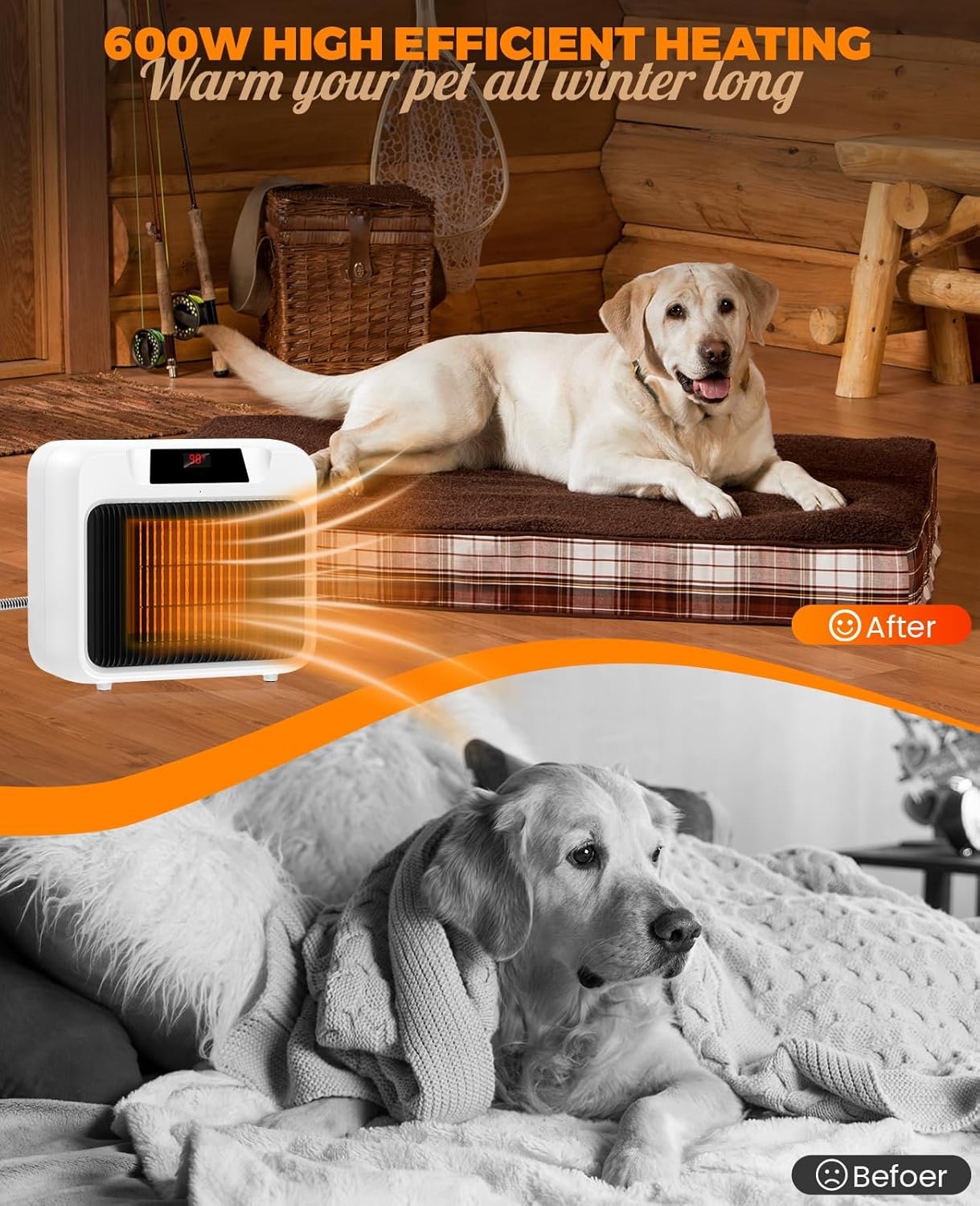
- Two power levels (300W/600W) let you balance warmth and energy consumption.
- Quick apparent warm-up and steady circulation via the built-in fan.
- Thermostat automatically maintains a narrow temperature band for comfort.
- Multiple safety features including anti-chew cord, insulated surface, and overheat protection.
- Magnetic removable guard simplifies cleaning.
- UL and RoHS certification adds confidence about electrical safety and materials.
Cons
- Coverage limit (~150 ft³) means it’s not suitable for large shelters without adding units.
- Thermostat target temperatures may be higher than needed for some pets, so you’ll need to monitor comfort and behavior.
- The fan may create noise some sensitive animals or light-sleeping owners might notice.
- 6-foot cord may be short for certain setups, requiring extension with GFCI-protected and pet-safe extension strategies.
- Not intended as a primary heat source for severe, prolonged sub-zero conditions—supplemental only in many climates.
Real-world Performance and User Experience
When you actually use the heater, you’ll notice it’s set up for practical, low-maintenance heating rather than luxury features. People who’ve used similar PTC-based pet heaters often comment on the steady nature of the warmth and the convenience of the anti-chew cord and magnetic filter.
Noise and fan operation
There is a small internal fan to circulate warm air, and while it’s not as noisy as a space heater fan, it’s audible. If your pet is extremely noise-sensitive, consider a short trial period to ensure they aren’t stressed.
Durability and expected lifespan
PTC elements tend to be durable because they self-limit temperatures and don’t rely on exposed heating coils that burn out. If you keep the unit clean and free of moisture, it should provide multiple seasons of reliable service. Inspect the cord and guard periodically and replace if you detect significant wear.
Energy Use and Cost
You’ll control the heater’s energy consumption by selecting 300W or 600W modes. Understanding how that translates into cost can help you budget.
Rough energy cost estimate
Assume your local electricity rate is $0.15 per kWh:
- 300W mode consumes 0.3 kW. Running 24 hours costs 0.3 kW × 24 h × $0.15 = $1.08/day.
- 600W mode consumes 0.6 kW. Running 24 hours costs 0.6 kW × 24 h × $0.15 = $2.16/day.
In reality, because of the thermostat cycling and PTC self-regulation, the unit will not run continuously at full wattage. Your daily cost will likely be significantly less, especially if the unit only runs intermittently to maintain temperature.
Ways you can save
- Use the lower wattage mode (300W) where possible.
- Improve insulation of the shelter—draft-proofing and added bedding reduce heater run time.
- Use a timer or thermostat override (external) to limit operation to the coldest hours.
Comparison with Other Pet Heating Options
You’ll want to weigh this heater against alternatives so you can decide what best fits your pet and environment.
Heated pads/mats
- Pros: Direct heating for pet contact, usually lower wattage.
- Cons: Pets may chew cords or rest on them and risk burns; pads heat only point-contact areas rather than whole-enclosure air.
- The dog house heater is better at warming ambient air and preventing entire shelter chill.
Heat lamps
- Pros: Instant radiant heat.
- Cons: High fire risk, bulbs can be chewed or burst, and lamps don’t distribute heat evenly; not safe in many coop situations.
- The PTC heater is safer and more controlled, with fewer ignition concerns.
Infrared panels
- Pros: Efficient for certain applications and safe for many enclosures.
- Cons: More expensive and sometimes require more complex mounting; panels may not include thermostat control out of the box.
- This product is a simpler, lower-cost solution with an integrated thermostat.
Multiple smaller units vs one larger unit
- Multiple units can offer redundancy and better distribution for larger spaces.
- One unit is simpler and cheaper but might create cold spots.
- If your shelter approaches or exceeds 150 ft³, consider multiple units or a different heating strategy.
Safety Tips and Best Practices
You’ll get the most out of this heater by following some smart practices to protect your pet and equipment.
- Always mount the heater securely using the included bracket and hardware.
- Keep bedding and flammable materials away from the heater intake and output.
- Use a GFCI-protected outlet for outdoor or damp-area connections.
- Routinely inspect the anti-chew cord; replace it if you see bite marks.
- Do not submerge the unit or expose it to heavy rain—ensure the shelter provides adequate overhead cover.
- If you need an extension cord, use only a heavy-duty, outdoor-rated extension with appropriate grounding and GFCI protection; avoid running cords through areas where pets can reach them.
- Monitor your pet’s behavior the first few nights to ensure the heater’s warmth and noise are comfortable for them.
Frequently Asked Questions (FAQ)
You’ll likely have questions about compatibility, use, and safety. Here are answers to common concerns.
Will this heater overheat my small dog house?
The thermostat prevents continuous high-temperature operation by stopping heat output when the area immediately around the unit reaches about 100°F and restarting below about 95°F. However, monitor your pet—if your dog seems uncomfortable or overheated, adjust, add ventilation, or reduce run time.
Can I use it outdoors?
Yes, but only in a sheltered outdoor enclosure where the unit won’t be exposed to direct rain, snow, or standing water. The unit is intended for use inside small sheltered spaces such as dog houses and coops.
Is the anti-chew cord chew-proof?
It’s an anti-chew design that reduces the risk of chewing damage, but no cord is truly indestructible. Continue to inspect for chew marks and consider additional cord protection if your pet is a persistent chewer.
How many heaters do I need for a large kennel?
If your kennel volume exceeds the ~150 ft³ heating guideline, you may need multiple units or a different heating approach. Calculate your enclosure’s volume (length × width × height) and compare to 150 ft³ as a rule of thumb.
Can I leave it on 24/7?
You can, but it’s best to use thermostat-controlled operation, good insulation, and regular monitoring. Continuous operation increases the likelihood of wear and energy costs; thermostat cycling reduces continuous runtime.
Troubleshooting
You’ll want to know basic troubleshooting steps for common issues.
- No heat: Check power connection, outlet, and circuit breaker. Ensure the thermostat hasn’t shut off because of ambient temperature.
- Fan noise: Ensure the unit is mounted securely and the magnetic hair guard is clean. If noise persists, inspect for foreign objects or contact manufacturer support.
- Unit cycles too frequently: Check placement; if the thermostat senses rapid fluctuations, move the heater away from drafts or direct air flows that could confuse the sensors.
Final Verdict
You’ll find this Dog House Heater With Thermostat,Heated Dog House With 6FT Anti Chew Cord and 2 Heating Mode (300/600W), Safe Pet House Heater for Dogs Chicken Coops Rabbits to be a practical, safety-focused option for keeping small sheltered enclosures comfortably warm. The combination of PTC heating, an upgraded thermostat, anti-chew cord, and removable magnetic guard makes maintenance straightforward and reduces many common risks.
This heater is best suited to enclosed, protected shelters up to about 150 cubic feet, and for owners who want a simple, effective supplement to bedding and shelter insulation rather than a replacement for full-space heating. You’ll appreciate the safety features and thermostat control, and if you follow recommended placement and maintenance practices, it should serve reliably through cold seasons.
If you need more guidance choosing heater placement or determining whether this unit fits your enclosure size, tell me the dimensions and layout of your pet’s shelter and I’ll help you calculate the proper coverage and placement strategies.
Disclosure: As an Amazon Associate, I earn from qualifying purchases.